Tuesday, October 23, 2012

Biologists record increasing amounts of plastic litter in the Arctic deep sea

Science Daily: The sea bed in the Arctic deep sea is increasingly strewn with litter and plastic waste, according to researchers. The study is published in the advance online publication of the scientific journal Marine Pollution Bulletin by Dr. Melanie Bergmann, biologist and deep-sea expert at the Alfred Wegener Institute for Polar and Marine Research in the Helmholtz Association. The quantities of waste observed at the AWI deep-sea observatory HAUSGARTEN are even higher than those found in a deep-sea canyon near the Portuguese capital Lisbon.

For this study Dr. Melanie Bergmann examined some 2100 seafloor photographs taken near HAUSGARTEN, the deep-sea observatory of the Alfred Wegener Institute in the eastern Fram Strait. This is the sea route between Greenland and the Norwegian island Spitsbergen. "The study was prompted by a gut feeling. When looking through our images I got the impression that plastic bags and other litter on the seafloor were seen more frequently in photos from 2011 than in those dating back to earlier years. For this reason I decided to go systematically through all photos from 2002, 2004, 2007, 2008 and 2011," Melanie Bergmann explains.

The deep-sea scientists from the HGF-MPG Group for Deep-Sea Ecology and Technology of the Alfred Wegener Institute regularly deploy their towed camera system OFOS (Ocean Floor Observation System) during Polarstern expeditions to the HAUSGARTEN. At the central HAUSGARTEN station it is towed at a water depth of 2500 metres, 1.5 metres above the sea bed, and takes a photograph every 30 seconds. Deep-sea biologists principally use these photographs to document changes in biodiversity with respect to larger inhabitants such as sea cucumbers, sea lilies, sponges, fish and shrimps. However, for Melanie Bergmann they also provided evidence of increasing deep-sea pollution: "Waste can be seen in around one percent of the images from 2002, primarily plastic. In the images from 2011 we made the same discovery on around two percent of the footage. The quantity of waste on the sea bed has therefore doubled," the scientist says. If we consider the time span between 2007 and 2011 the amount has even risen by an order of magnitude.

At first sight, the "two percent" result may not cause much concern. However a comparison demonstrates the true extent of the pollution in the Arctic deep sea: "The Arctic Ocean and especially its deep-sea areas have long been considered to be the most remote and secluded regions of our planet. Unfortunately, our results refute this notion at least for our observatory. The quantities observed were higher than those recorded from a deep-sea canyon not far from the industrialised Portuguese capital Lisbon," Melanie Bergmann explains. It is also important to bear in mind that, according to recent research, more plastic waste will accumulate in deep-sea canyons than in open slope environments such as HAUSGARTEN....

The OFOS-system of the HGF-MPG Joint Research Group on Deep-Sea Ecology and Technology. Graphic: Normen Lochthofen, Alfred Wegener Institute

Making transport a driver for development in Africa

AlphaGalileo via York University: A new report by a panel of international experts highlights policies to improve air quality road safety and congestion, supporting African development. Transport is playing a big role in delivering economic development to Africa. But as the demand for transport grows and cities expand, policy makers need to tackle transport challenges to make sure that all parts of society can benefit from this central driver of jobs and growth.

“Transport policies in Africa are of critical importance to the delivery of sustainable cities, healthy citizens and poverty eradication,” says Dr Dieter Schwela from Stockholm Environment Institute at the University of York. “This new report synthesizes knowledge on current trends, key issues and challenges facing policy makers and provides examples of best practice and case studies from African countries and internationally.”

Road safety is extremely poor compared with the rest of the world with Africa accounting for over 10 per cent of global road fatalities.  As urban populations in Sub Saharan African countries continue to expand at unprecedented rates, traffic congestion is increasing with some cities approaching gridlock.

Urban air and noise pollution is also worsening, particularly as result of the increase in numbers of vehicles and their associated emissions. Lack of air quality monitoring, emission standards and regulatory procedures exacerbate the problems. This has serious implications in terms of health and equity as well as thwarting economic development. Rapidly rising greenhouse gas emissions from the transport sector are also a cause for concern....

A road in Mauritania, shot by Boulmaouahibe, Wikimedia Commons, under the Creative Commons Attribution-Share Alike 3.0 Unported license

Climate change threatens marine environment in the Baltic Sea

Terra Daily via SPX: At the end of the 21st century, the temperature in the Baltic Sea will be higher and the salt content lower than at any time since 1850. If no action is taken to alleviate the effects of climate change, there may be major consequences for the marine environment. "This is the first time that anyone has taken a detailed look at how climate models and individual factors combine to affect a specific region. This makes this project unique," says Jonathan Havenhand from the Department of Biological and Environmental Sciences at the University of Gothenburg, Sweden.

A large number of researchers from countries around the Baltic Sea have been collaborating on an interdisciplinary project to study the effects of global climate change on the environment in the Baltic Sea. They have combined today's best climate models with models of additional factors that affect the environment in the Baltic Sea.

"There are plenty of studies showing the environmental impact of individual factors, or models showing global changes in the climate, but this is the first time that anyone has taken a detailed look at how these factors combine to affect a specific region. This makes this project unique," says Jonathan Havenhand from the Department of Biological and Environmental Sciences at the University of Gothenburg....

A scene at Eckernfoerde on the Baltic coast, shot by Dirk Ingo Franke, Wikimedia Commons, under the Creative Commons Attribution-Share Alike 2.0 Germany license

Indonesian president fears that disasters could push millions into poverty

UN Office for Disaster Risk Reduction: The President of Indonesia, Dr. Susilo Bambang Yudhoyono, said today that the UN High-Level Panel of Eminent Persons on the Post-2015 Development Agenda which met last month for the first time, shares the view that "natural disasters and other crises could push millions of people back into poverty."

Speaking at the opening of the 5th Asian Ministerial Conference on Disaster Risk Reduction, President Yudhoyono, who co-chairs the UN High-Level Panel with President Ellen Johnson-Sirleaf of Liberia and Prime Minister David Cameron of the UK, said: "I am glad that there was a common view in the Panel during the first meeting on the importance of factoring in natural disasters in the development agenda.

"The Panel viewed that natural disasters and other crises could push millions of people back into poverty. The Panel also underlined that we must safeguard the MDG gains from setbacks caused by natural disasters and climate change." Global economic losses from disasters last year were $380 billion. The Panel meets again in London next month.

...President Yudhoyono, who is also the first UNISDR Global Champion for Disaster Risk Reduction, said that Indonesia was committed "to ensure that the post-2015 development agenda takes into account the natural disaster dimension."...

A land rights protest in Jakarta by farmers in 2004, shot by Jonathan McIntosh, Wikimedia Commons, under the Creative Commons Attribution 2.5 Generic license

Monday, October 22, 2012

Ice sheet retreat controlled by the landscape

India Education Diary: A UK team led by Durham University has found that the geometry of channels beneath the ice can be a strong control on ice behaviour, temporarily hiding the signals of retreat. The findings, which provide the first simulation of past ice-sheet retreat and collapse over a ten-thousand- year period in Antarctica, shed new light on what makes ice stable or unstable and will help refine predictions of future ice extent and global sea-level rise, the researchers say.

The International Panel on Climate Change (IPCC) has stated that one of the main challenges in predicting future sea-level rise is to quantify and model the interactions between evolving ice sheets, oceans, sea level and climate. Significant efforts have been made over the last decade to develop computer models and collect data in order to reduce uncertainties and understand the potential impacts under scenarios of future climate change.

The results of the new research from Durham University, the University of Sheffield, the University of Cambridge, and the British Antarctic Survey are published in the journal Nature Geoscience. Lead author Dr Stewart Jamieson, a glaciologist at the Department of Geography, Durham University, said: “Our research shows that the physical shape of the channels is a more important factor in controlling ice stability than was previously realised. Channel width can have a major effect on ice flow, and determines how fast retreat, and therefore sea-level rise, can happen.

Although climatic and oceanic changes are crucial drivers of ice loss, the research shows that the landscape below the ice strongly controls the speed of any retreat. Dr Jamieson said: "Our results suggest that during an overall phase of retreat an ice stream can appear almost stable when in fact, in the longer-term, the opposite may be the case. Getting a clearer picture of the landscape beneath the ice is crucial if future predictions of change in the ice-sheets and sea level are to be improved.”...

Marine-based ice streams are the fast flowing arteries of ice sheets, draining approximately 90 per cent of the ice that reaches the sea. They flow through large channels where the ice can move thousands of metres in a year. According to the scientists, the unpredictable nature of ice streams makes forecasting ice-sheet retreat extremely difficult. If ice streams speed up they can cause sea level to rise....

Located just 600 miles (970 kilometers) from the North Pole, Franz Josef Land is perpetually coated with ice. Glaciers cover roughly 85 percent of the archipelago’s land masses, and sea ice floats in the channels between islands even in the summertime. The Advanced Spaceborne Thermal Emission and Reflection Radiometer (ASTER) on NASA’s Terra satellite observed the islands of central Franz Josef Land on August 16 and 19, 2011. (Another sensor on Terra captured a wider view on August 17, 2011.)

Adapting suburbia to face up to climate change

Phys.org: How can we change and adapt our homes to cope with climate change? What actions can neighbourhoods take to mitigate problems caused by increased heat stress and reduced comfort during hot spells, restrictions on water use, reduced air quality, and stress and costs associated with flooding and storm damage? What are the best adaptations we can make to our homes? Should we all install solar panels and grow our own vegetables? What wider infrastructures need to be introduced to prevent flooding prevalent in many areas of the UK? And how do we communicate what changes are best suited to different styles of home and different region in the UK?

These are just a few of the questions addressed in a research report led by a team at UWE Bristol, 'Suburban neighbourhood adaptation for a changing climate (SNACC)' that will be launched at the Royal Institution of Chartered Surveyors in London on Tuesday 23 October 2012. Don Foster, Parliamentary Under Secretary of State at the Department for Communities and Local Government will speak at the event.

.... Over 80% of people in England live in suburbs and they will experience warmer, drier summers and wetter winters in the future. By working with local authorities and residents the SNACC project recommends effective and practical adaptation measures for different types of English suburbs. Professor Katie Williams from UWE Bristol led the research team, she explains, "Adapting suburbs for future climate change is important. The vast majority of people live in suburban areas and they spend most of their time in their homes.

In the future neighbourhoods will be hotter and drier in summer, and warmer and wetter in winter. There will be more heat waves, storms and floods. Our report shows how best to adapt homes, gardens, streets and public spaces. The research has shown, for example, the many benefits of shading on homes and in streets, and the effects of planting more greenery. It has highlighted the best ways of protecting against flooding and storms. However, the project also found that currently very few suburbs are being adapted, and that householders are very unlikely to make changes to their homes and gardens in response to climate change. We looked at ways to enable suburban adaptation, and suggest simple things like ensuring householders get the right information when they do DIY and build extensions, and far more complex solutions about changes to planning policies and partnership working...

Suburban Bournemouth, shot by Chris Downer, Wikimedia Commons via Geograph UK, under the Creative Commons Attribution-Share Alike 2.0 Generic license

UNDP discusses climate change in Sierra Leone

Augustine Samba in the Awareness Times (Sierra Leone): The United Nations Development Programme and Global Environmental Facility (GEF), in partnership with Sierra Leone Government have taken the lead to champion a discussion on climate related issues in the country. At a project inception workshop held on Saturday 20th October 2012, at the Shangi La Conference Room on Lumley Beach Rd, organizers dilated on “Strengthening Climate Information and Early Warning Systems in Western and Central Africa for Climate resilient development and adaptation to climate change in Sierra Leone”.

Chairman of the occasion, Dr. Reynolds Johnson said the theme itself was quite explanatory. He said that the fight against climate change in Africa would collapse as a result of what he referred to as negligible intervention of Africans themselves.

Mr. Johnson further stated that the fight on climate change issue should not be isolated, adding that lots of workshop trainings have been organized in Sierra Leone but that outcomes have not been implemented.

UNDP’s Deputy Country Director, Mr. Mohamed Abchir commended the Government for its tireless effort towards development of the National Adaptation Plan of Action on Climate Change (NAPA). He also thanked GEF for funding the climate related projects. He reassured UNDP’s continued support in the promotion of integrating climate change and disaster management, whilst adding that the UNDP is very concern about climate imparts in Sierra Leone.

Mr. Abchir disclosed that the looming negative effects of climate change and its related disasters could largely be blamed on the growing effects of the greater past and present release of green house gases caused by man’s activities and the absence of an effective early warning system in the country....

Lourdes sanctuaries start reopening after floods clean-up

Terra Daily via AFP: The French mountain town of Lourdes, whose spring water many Catholics believe can miraculously cure illness, began reopening its shrines Monday after flash floods that caused hundreds of thousands of euros in damage.

Hundreds of pilgrims who had come to visit the famous grotto where the Virgin Mary reportedly appeared to a peasant girl in 1858 had to be evacuated after heavy flooding hit the area on Saturday.

On Monday firefighters continued work on clearing the 20 centimetres (eight inches) of mud on the esplanade in front of the grotto and pilgrims were told that they would have to wait until Tuesday before it reopened....

In vulnerable Greece, mosquitoes bite back

Kate Kelland in Reuters: Just when it seems things couldn't get any worse for Greece, the exhausted and indebted country has a new threat to deal with: mosquito-borne diseases. Species of the blood-sucking insects that can carry exotic-sounding tropical infections like malaria, West Nile Virus, chikungunya and dengue fever are enjoying the extra bit of warmth climate change is bringing to parts of southern Europe.

And with austerity budgets, a collapsing health system, political infighting and rising xenophobia all conspiring to allow pest and disease control measures here to slip through the net, the mosquitoes are biting back.

Already malaria, a disease eliminated from Greece in 1974, is not just returning with visitors and migrants - as it does from time to time in the rest Europe - but is being transmitted from person to person within Greek borders. This year's death toll from West Nile Virus, a disease spread by Culex modestus mosquitoes, stood at 16 on October 11.

It's a sign of the times that Medecins Sans Frontiers, a global medical charity more usually associated with the fight to save lives of babies in sub-Saharan Africa, is now working full time in parts of southern Greece....

The Parthenon, shot by Tormod, Wikimedia Commons, public domain

Sunday, October 21, 2012

Drought leads to less seized marijuana

Kyle Nagel in the Dayton Daily News comes up with some stoner-related news: Ohio officials seized about 40 percent fewer marijuana plants in 2012 as part of a national program to battle growing operations. Officials said the drop can be attributed to drought conditions decreasing production.

The anti-marijuana operation, in which Ohio Bureau of Criminal Investigation works with county sheriffs, seized about 30,000 marijuana plants this year, the Ohio Attorney General’s Office announced last week. That was a drop from 50,704 in 2011 in the U.S. Drug Enforcement Administration-led Domestic Cannabis Eradication/Suppression Program.

The decades-long program funds state agencies — including about $500,000 annually in recent years for Ohio — to search and seize or destroy marijuana growing operations. Officials say the effort is important because marijuana is the only “drug of abuse” grown inside the U.S.

States use much of that money to pay for helicopters that fly over residential areas or farmland looking for growing operations. Those operations are often cut into farmland without a farmer’s knowledge.

But this year, Ohio officials noticed more marijuana growing in residential areas, such as gardens. BCI employs trained spotters to look for signs of marijuana from helicopters, and agents on the ground find the operations and make arrests, if possible.

“I think people are seeing what’s happening in other states, with some attitudes and some legislation passed about legalization for medicinal purposes, and they think, ‘I’ll take my chances,’ ” said Scott Duff, a BCI special agent supervisor for Ohio’s marijuana eradication program....

Cannabis shot by Bogdan, Wikimedia Commons, under the Creative Commons Attribution-Share Alike 3.0 Unported license


Investment opportunities and risks resulting from global drought

Dubai Chronicle: The ongoing drought is the worst in the United States since at least 1956, with 63 percent of the lower 48 states suffering drought conditions at the end of August. While conditions are far from those in the Dust Bowl years of the 1930s, drought conditions are the new normal, according to “Global Drought – Opportunities and Risks,” a new BofA Merrill Lynch Global Research report. It follows thematic megatrend reports from BofA Merrill Lynch Global Research on obesity, energy efficiency, safety and security and water.

The U.S. and global drought underscores increased long-term challenges to global food, water and energy security, as demand for food and energy each are expected to climb 50 percent by 2030 with the demand for water growing by 40 percent over the same period, potentially creating a perfect storm of interlinked challenges.

These changing conditions pose a range of opportunities and risks for investors. For investors interested in the themes of fighting drought and in promoting food, water and energy security, Bank of America Merrill Lynch has introduced a screen that identifies liquid stocks exposed to global drought-related themes under the Bloomberg ticker MLEIARID. The stocks included in the screen are those that it considers to be long-term solution providers in such areas as water, fertilizers, crop science, energy efficiency, second-generation biofuels and renewables.

“The severity of the global drought underscores the long-term challenges for national and global economies,” said Sarbjit Nahal, equity strategist with the Bank of America Merrill Lynch Global Research ESG (Environment, Social and Governance) and Sustainability Team and a co-author of the report. “Food, water and energy security are increasingly bigger issues, and as governments, businesses and other players struggle to adapt to and mitigate drought conditions, there will be an evolving set of opportunities and risks for investors.”...

A dry stream channel during drought conditions, North Platte River in Goshen County, Wyoming, near Wyoming-Nebraska state line, shot by Kirk Miller of the US Geological Survey, public domain

Indian farmers cotton on to sustainable farming

Mariette le Roux in AFP: When Indian icon Mahatma Gandhi took up the baton for home-grown cotton a century ago, he may not have realised the devastating impact its cultivation would have on the land he so loved. Cotton is a thirsty plant and parts of India drought-prone. But the intensive farming process for cotton leaches the soil and requires high pesticide and fertiliser use that pollutes further downstream.

Now in the southeastern district of Warangal, dotted with statues to the independence leader in his trademark cotton dhoti, a project to grow the fibre in a way that causes less harm to the land is taking root.

An initiative of green group WWF, the project in an area covering 103 villages seeks to help struggling farmers reduce input costs, improve yields, and lessen their environmental footprint by cutting the use of chemicals and water. ...The India Sustainable Cotton Initiative started in the region in 2006 with just 16 hectares and 37 farmers, and now covers more than 21,000 hectares and nearly 12,000 farmers. Some estimates say the project has brought a three percent increase in yield and a 25 percent reduction in costs.

Local NGO Mari (Modern Architects for Rural India), which runs the initiative alongside the WWF, said farmers involved in the project used 61 percent and 51 percent less water than normal in 2009 and 2010 respectively. Last year, they used 93 percent less pesticides and 25 percent less chemical fertiliser than farmers who had not adopted the better management practices.

Project farmers now use drip irrigation and dig watering funnels near the roots of their plants rather than sucking dry boreholes and losing scarce water to evaporation through sprinkling. Instead of chemical fertiliser, many use plant and garlic extracts as pest repellents. And the farmers sign a code of conduct, undertaking not to use pregnant women and children as cotton-pickers -- a common practice in a labour-intensive industry....

A woman picking cotton in a field near Nagarjuna Sagar — Andhra Pradesh, India. Shot by Claude Renault, Wikimedia Commons via Flickr, under the Creative Commons Attribution 2.0 Generic license

Egypt pushes Ethiopia to scrap Nile dam

Terra Daily via UPI: Egypt increasingly views Ethiopia's plan to build a massive 6,000-megawatt hydroelectric dam on the Nile River as a threat to its national security because it will seriously cut the Arab state's water supplies.

Egypt depends on the Nile for virtually all of its water and is mounting a major diplomatic and economic campaign to scupper the plan. "Even direct military action by Egypt cannot be ruled out," observed the U.S. global security consultancy Stratfor.

Both countries have undergone major political upheavals recently, which have added to the tension in a long-running battle for control of the world's longest river which rises in the Ethiopian highlands. Egypt's Muslim Brotherhood now controls the presidency and Parliament following the February 2001 downfall of longtime dictator Hosni Mubarak and is locked in a struggle for supremacy with the military.

Longtime Ethiopian ruler, Prime Minister Meles Zenawi, as harsh a dictator as Mubarak and whose ethnic Tigray group has long dominated the military, died Aug. 20, leaving a leadership vacuum and internal rivalries.

...There were years or fruitless negotiations between Cairo and the upstream states in the Nile Basin initiative, a forum set up in 1999 by all the Nile states. But in 2010, Egypt found its domination of the river heavily challenged.

Ethiopia and four African states -- later joined by two more -- threw out a 1959 agreement imposed by British colonial rulers that gave Cairo control of 90 percent of the Nile's water and veto power over dam construction upstream that would limit its water supplies....

Map of the course of the Nile by Baumanns, public domain

Mainstreaming climate change adaptation in Bangladesh into national planning

Saleemul Huq in the Daily Star (Bangladesh):  As the adverse impacts of human induced climate change become apparent and irrefutable, more and more countries are developing national adaptation plans. Most of these planning exercises start by treating climate change impacts as risks to be adapted to and base the analysis on which parts or sectors of the country are most vulnerable and then develop plans to reduce their vulnerability. The Bangladesh Climate Change Strategy and Action Plan (BCCSAP) is a good example of this type of plan.

However, as the magnitude and long-term nature of the climate change threat is realised it is becoming clear that simply implementing a set of adaptation projects, although useful, is not going to be sufficient. If long-term resilience is to be built then climate change adaptation (as well as mitigation) needs to be embedded (or mainstreamed) into regular national planning at all levels. The Planning Ministry in Bangladesh has started such an initiative to embed climate change into regular planning and also to have a climate change element built into the national budget.

The International Centre for Climate Change and Development (ICCCAD) at the Independent University, Bangladesh has also taken an initiative to train officials from ministries of planning in Asia and Africa through a series of short training courses on mainstreaming climate change into national planning.

The first training course for Asia was held in Dhaka last year and the second course for Africa was held recently in Dar es Salaam, Tanzania. Altogether over fifty planning officials from over twenty countries in Asia and Africa were trained. They have now, themselves, formed a network of Climate Change Planners....

Saturday, October 20, 2012

Ozone affects forest watersheds

Terra Daily via SPX: U.S. Forest Service and Oak Ridge National Laboratory (ORNL) scientists have found that rising levels of ozone, a greenhouse gas, may amplify the impacts of higher temperatures and reduce streamflow from forests to rivers, streams, and other water bodies. Such effects could potentially reduce water supplies available to support forest ecosystems and people in the southeastern United States.

Impacts of ozone, a global scale pollutant, on forests are not well understood at a large scale. This modeling study indicates that current and projected increases in ozone in the 21st century will likely enhance the negative effects of warming on watersheds, aggravating drought and altering stream flow. Using data on atmospheric water supply and demand and statistical models, researchers with the Forest Service and ORNL were able to show what effects ozone can have on stream flow in dry seasons.

Published in the November issue of the journal Global Change Biology, the study suggests that ozone has amplified the effects of warmer temperatures in reducing streamflow in forested watersheds in the southeastern United States.

"From previous studies, we know a lot about ozone's influences on crops and leaves of young trees. However, no studies have investigated the impacts of ozone on water flow in large forested watersheds," says Ge Sun, research hydrologist with the Forest Service Eastern Forest Environmental Threat Assessment Center "Our studies show that ozone has a possible connection in the reduction of streamflow in late summer when flow is generally lowest, particularly in areas with high ozone levels such as the Appalachian Mountains in the Southeast."

Researchers developed models based on 18 to 26 years of data and observed streamflow in response to climate and atmospheric chemistry during the growing season. The research team evaluated individual and interactive effects of ozone on late season streamflow for six southeastern forested watersheds ranging in size from 38 acres to more than 3,700 square miles. Estimates of ozone's influence on streamflow ranged from 7 percent in the area of lowest ozone in West Virginia to 23 percent in the areas of highest exposure in Tennessee....

Rim of the Gap trail in Georgia, shot by John Foxe, public domain

Climate change bill of AUS $1 billion for suburbs

Cameron Houston in the Age (Australia): Waterfront communities from Southbank to the Mornington Peninsula face a damage bill of more than $1 billion from severe storms and rising sea levels over the next 90 years, according to a confidential climate change report.

The report, by federal, state and local governments, warns that parts of Rosebud foreshore could be completely submerged by 2100 during coastal flooding, while residents around Elwood's canals face massive annual losses if government and local councils fail to act.

Maps from the report show a large section of Point Nepean Road would be regularly cut off during storms, while local residents and businesses would encounter frequent floods resulting from climate change.

The research warns that riverfront properties at Southbank are at greatest risk from flooding, with the annual cost of damage expected to increase from about $3 million in 2011 to almost $20 million by 2100. The annual cost of flooding in Elwood would rise from about $2.5 million in 2011 to $15 million by the end of the century, according to the report, which is based on data from Melbourne Water. Mordialloc would also experience a sharp increase in flood damage without immediate government action.

Due to be released next February, the Port Phillip Coastal Adaption Pathways Program examined four vulnerable coastal areas and another flood-prone area in North Melbourne known as Arden-Macaulay. All four Melbourne councils involved with the research have been briefed on the findings....

Flash flooding in the intersection of Spencer and Flinders Streets during the 2010 Melbourne thunderstorms. Shot by Nick carson, Wikimedia Commons, under the Creative Commons Attribution-Share Alike 3.0 Unported license

Spanish study matches forest fires to the last two years high temperatures

PhysOrg: A study led by some University of Barcelona researchers analyses the impact of interannual and seasonal climate variability on the fires occurred in Catalonia last summer. The study concludes that summer fires, related to summer climate conditions, are correlated with antecedent climate conditions, especially winter and spring ones with a lag time of two years. The results suggest that precipitation and temperature conditions regulate fuel flammability and fuel structure.

According to the correlations observed, the study provides a model to produce long-term predictions. The study, published in the journal Climatic Change, comes out of the doctoral thesis of the researcher Marco Turco, directed by the UB researcher Maria del Carme Llasat, co-author of the article.

From 1983 to 2007, period analysed in the study, more than 16000 fires events were recorded and the total burned area was more than 240000 hectares, around 7.5 % of Catalonia. The work develops a statistical analysis of these fires and shows that, from a climate point of view, according to Maria del Carme Llasat, "is possible to develop a model that gives us an estimation of the number of fires and the extension of the burned area related to monthly average temperature and rainfall. We developed a simple regression model which includes the influence of spring-summer climate conditions of the studied year, but specially other variables which are determinant, although they do not seem to."

The established correlations allow us to prove that, for example, low minimum temperatures in winter and summer contribute to an increase in the number of fires. However, the extension of the burned area highly depends on the winter months' rainfall, and in both cases on the winter-spring temperatures with a time lag of two years....

Sun obscured by the smoke of a 2010 wildfire near Guitiande, in Brión, Galicia, Spain. Shot by Tapetum, Wikimedia Commons via Flickr, under the Creative Commons Attribution-Share Alike 2.0 Generic license

Welcome to the UN’s secret climate adaptation summit

Ed King in Responding to Climate Change: COP11 in Hyderabad is probably the biggest climate adaptation conference you have never heard of. Representatives from 192+ countries have travelled to India, drawing a crowd of 14,000 delegates to the UN Convention on Biological Diversity’s (CBD) bi-annual summit.

But aside from a solitary New York Times journalist who arrived on Monday, media coverage outside India is fairly low-key. This is a pity, as the subjects up for discussion are fascinating, and directly relevant to the climate debate. In the past week geo-engineering, biofuels, REDD+, coastal protection strategies and increased environmental finance commitments have all been on the agenda.

For delegates here it is simple. The future of the oceans, forests and endangered species all depend on how high global temperatures will rise. At this morning’s press conference CBD communications officer David Ainsworth told me climate science informs and influences this process, although he stressed the CBD has no mandate to directly address carbon emissions.

That’s a matter for the UN climate talks in Doha later this year, but what I am hearing in Hyderabad is the world planning for a world 2°C+ above pre-industrial levels. There is little of the forced optimism I have witnessed in the climate arena, where a culture of diplomatic omerta obliges delegates to talk of a 1.5°C target. That’s not to say this isn’t worth aiming for or achievable, but few people I have spoken to believe it is realistic.

Instead, in the autumnal Indian heat, there is a brutal realism that what we call the environment is slowly disintegrating, and that global warming will speed up that process....

African countries asked to take climate change seriously

Rose Athumani in the Tanzania Daily News: The second annual conference on Climate Change and Development in Africa opened here on Friday with a call for African countries to push hard for scaling up national and international efforts in relation to adaptation, mitigation, finance, technology transfer and development.

Addressing delegates, the Prime Minister Federal Republic of Ethiopia, Mr Hailemariam Dessalegn said finance needed for climate change action in Africa must be real and significant. "The performance by developed countries in activating short-term financial commitments at the Copenhagen Climate Conference can only be described as extremely disappointing. This can only be defined that their action has failed the new additional test," he said.

Mr Dessalegn said the lack of clear commitment from the developed nations, is a risk to the Green Climate Fund, noting that it will be no more than an empty shell. The Green Climate Fund was established to make significant and ambitious contribution to the global efforts towards attaining the goals set by the International Community to combat climate change."The urgent need for funds for climate action cannot be overstated. African countries have a moral and a legal claim to it," he emphasised.

He said African countries must continue to articulate their concerns and define their position with added vigour and ensure they are well understood and accepted by everyone."Africa should continue to play the additional and rather undesirable role of getting the major economies in the world to talk to one another," he explained adding that this can help break the current log-jam....

Friday, October 19, 2012

Dry ground under a bell

Shown here is the World Peace Bell in Newport, Kentucky, right across the Ohio River from Cincinnati.  I spent most of my childhood not far from here.   About five blocks away from the bell is the Ohio itself.  In another direction, a large levee protects Newport from the Licking River where it empties into the Ohio. 

One look at a map will tell you that this spot must vulnerable to flooding. Yet I remember hearing in school how the terrible flooding of the Ohio River was now a thing of the past, and the Ohio River was now under control.   The traumatic flooding in 1937 prompted a spate of dam building that have controlled the river since then.  From childhood I witnessed plenty of flooding in nearby creeks and streams, but the Ohio River never seemed to rise to approach the flood boundaries that have been created.  A low-lying airport might be unusable for a while, and a few other spots were prone to getting wet, but nothing too bad.

In my climate change-sensitized adulthood, though, I wonder if this is still true. The banks of these two rivers have been developed beyond recognition, with tens of millions of dollars in attractive real estate now on low-lying ground. Riverfront Stadium as well as a new sports palace whose name I don't even know look awfully exposed to me as a I drove by.  Much more is at stake than there was during my school days.  A quick search shows that there has been some minor to moderate flooding in recent years, but nothing as damaging as the Mississippi.

In any event, the World Peace Bell is worth a visit.  Newport and Covington were always the uncontained id for straitlaced Cincinnati, and an economy built on vice and pleasure seems to have resulted into many funky, attractive old building being gentrified -- threatening waters notwithstanding. You may use my photo with a creative commons license of your choice.

Thursday, October 18, 2012

Coastal defences causing Northern Ireland's beaches to disappear

Linda Stewart in the Belfast Telegraph:  Sea defences designed to protect us from the waves are causing many of our best-loved beaches to erode away, it’s been claimed. Coastal expert Derek Jackson said we need to make better use of scientific expertise when it comes to managing our coasts.

Prof Jackson says that people build homes in certain places because they admire the view. But the sea wall they build to protect that home from the storms deflects the waves back and gradually eats away at the beach.

Prof Jackson tackled the issue during his inaugural professorial lecture at the University of Ulster’s Coleraine campus. In it, he outlined how Northern Ireland is now leading the world in coastal research, bringing an improved understanding of the potential danger of coasts across the globe from climate change.

“Modern coastal science has advanced much in recent years due to the advent of state-of-the-art monitoring and computer modelling, revealing a great deal about how coastlines function as a complex environmental system,” he said. “Management of the beach and dune zone, however, still lacks proper science-led approaches.”

Prof Jackson said most countries are ill prepared for sea level rise. Until now, we have benefited from a geological ‘bounce’ that has seen Northern Ireland rising after its release from a mile-thick icesheet that pressed on it in the last Ice Age. That rise has kept pace with sea level rise, providing us with a level of immunity against the rising waters….

Dunes in Tyrella, Northern Ireland, shot by Albert Bridge, Wikimedia Commons via Geograph UK, under the Creative Commons Attribution-Share Alike 2.0 Generic license

Pakistan should take strong position on global climate change issues, says climate advisor

The Business Recorder (Pakistan): A renowned Climate Scientist, Professor Dr Qamar-Uz-Zaman Chaudhry remained the director general of Pakistan Meteorological Department between 1996 and 2010. He is a research scientist in the fields of Global Warming & Climate Change, Meteorology, Atmospheric Sciences, Hydrology and Seismology.

...BRR: Let's hear your views and thoughts on the issue of Climate Change. What have been the recent manifestations of this issue in Pakistan and across the globe?

QC: The frequency and intensity of droughts and floods has increased in many parts of the world. South-East Asia, particularly Pakistan is experiencing this change in extreme weather events whose frequency has increased over last several years. Either there is no rain, or if there is, it is equivalent to many years of rainfall. Last year's one month rainfall in Sindh was equal to the amount of rains in previous five years combined. This year there were drought-like conditions in many parts of Balochistan, Cholistan and Tharparkar until a belated spell of rains started in late August. At the same time, still, there were areas across Pakistan that had flash flooding.

Sensitising the authorities is very important - and Wapda and Irsa took some extraordinary management measures this year and disregarded their previous SOPs to fill the Tarbela Dam. They need to be praised for these managerial skills.

There is a huge impact of climate change on global agricultural economy, as output declines or is washed out in extreme climate events. Strategic food reserves are depleted fast even as it becomes more expensive for the grain-importing countries to purchase those commodities at higher prices. Domestic prices increase and there are more incidences of hoarding and smuggling due to food shortages. In 2007-08, there were food riots in around 30 countries across the globe - and interestingly, the food shortages weren't fundamental but speculative buying was the main reason for the crisis. This time around, due to recent erratic weather across the globe, we may experience real food shortages….

NASA image of a dust storm over the Indus River

Malaria deaths on the rise in Africa

Richard Muponde in NewsDay (Zimbabwe): At least 655 000 people died of malaria out of 216 million cases in Africa in 2010 due to increased breeding of mosquitoes as a result of warm temperatures and increased rainfall in some parts of the continent, the World Meteorological Organisation (WMO) has said.

The organisation released the information at the ongoing second session of African Ministerial Conference on Meteorology in Victoria Falls yesterday. WMO said there was need to carry out malaria mitigation strategies by African countries to reduce the death toll.

“Malaria mitigation strategies require a combination of preventative and curative treatment and close collaboration between the health and climate sectors. Countries increasingly incorporate early detections in their malaria control efforts. This entails careful monitoring of climate conditions favouring pending outbreak,” WMO said in a statement.

The organisation said timely provisions of climate information with several months lead-time could be combined with well-targeted response strategies that provide distribution of medication, insecticides and bed nets to vulnerable communities.

“The malaria early warning systems combines seasonal rainfall forecasts with vulnerability assessments and population and health surveillance information. Examination of climatic variables which influence the proliferation of mosquitoes facilitates the prediction of potential outbreaks. The technique gives health programme officers up to four months of advance notice,” the WMO said....

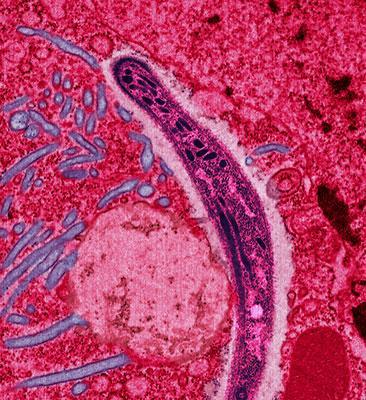
The malaria plasmodium, shot by Ute Frevert; false color by Margaret Shear, Wikimedia Commons, under the Creative Commons Attribution 2.5 Generic license


Drought hits northern rice farmers in Sri Lanka

IRIN: Officials in northern Sri Lanka’s Vavuniya District say 60 percent of the rice harvest could be lost if the dry weather continues.  “In Mannar District [in the north] we have records indicating that between 5,000 to 6,000 paddy hectares of the cultivated 10,000 are lost,” Ravi Vinanithambi, an environment officer for the North East Reawakening Programme (NERP – part of the Ministry of Economic Development), told IRIN.

Residents report no significant rain in the region for over eight months. In some villages like Visvamadhu in Kilinochchi District, they say the last rains of any substance were in September-November 2011.

“This year has been a big problem because most of the people in the region depend on agriculture heavily,” Vinanithambi said, noting despite some rains earlier this week,they needed several weeks to fill dried-up wells and reservoirs.

According to the most recent Sri Lanka Labour Force Survey released on 11 October by the government’s Census and Statistics Department, more than 37 percent of the over one million people in Northern Province depend on agriculture as their main source of livelihood…

A combine harvester at a rice farming collective in Kalmunai, Sri Lanka, shot by Frantishak, Wikimedia Commons, under the Creative Commons Attribution-Share Alike 3.0 Unported license

Afghanistan, UNEP launch USD $6 million initiative to help communities adapt to effects of climate change

AlertNet: The Government of Afghanistan, through its National Environmental Protection Agency (NEPA), has launched a USD $6 million climate change initiative, the first of its kind in the country's history.

This landmark scheme - to be implemented by the United Nations Environment Programme (UNEP) and funded mainly by the Global Environment Facility (GEF) - aims to help communities that are vulnerable to the effects of climate change, such as drought, and to build the capacity of Afghan institutions to address climate change risk.

"The Government of Afghanistan is showing a remarkable commitment to working with communities for a landscape approach to dealing with climate change in the country," said Michael Keating, UN Afghanistan Resident Coordinator, speaking from Bamyan in the Central Highlands, some 200km west of Kabul. "We also welcome the opportunity to help Afghan institutions better deal with shocks and hazards, and increase resilience at a decentralized level," he added.

UNEP identified Afghanistan as one of the countries most vulnerable to climate change, because of the potential impacts and its current limited capacity to react to these impacts. Climate change adaptation is especially important in developing nations, since those countries are predicted to bear the brunt of climate change effects. The overarching goal is to reduce the vulnerability of biological systems to these impacts….

An invader travels a road in Afghanistan's Tagab Valley, US Navy photo

Wednesday, October 17, 2012

Computer models of Earth's climate change confirmed on Mars

Deborah Zabarenko in Scientific American via Reuters: Computer models have accurately forecast conditions on Mars and are valid predictors of climate change on Earth, U.S. and French astronomers said on Tuesday. These computer programs predicted Martian glaciers and other features on Earth's planetary neighbor, scientists found.

"Some public figures imply that modeling of global climate change on Earth is 'junk science,' but if climate models can explain features observed on other planets, then the models must have at least some validity," lead researcher William Hartmann of the Planetary Science Institute said in a statement.

The team's findings were presented at the annual meeting of the American Astronomical Society's planetary sciences division in Reno, Nevada.

Some climate change skeptics, notably U.S. Senator James Inhofe, an Oklahoma Republican, dismiss human-spurred global warming as a hoax. Others accept that Earth's climate is changing, but discount a human cause. Still others, including Republican presidential nominee Mitt Romney, accept the idea of climate change, but maintain the science is inconclusive.

The science of climate change prediction is dependent in part on complex computer models that take into account multiple factors that influence Earth's climate, including the level of carbon dioxide and other greenhouse gases in the atmosphere….

The Twin Peaks are modest-size hills to the southwest of the Mars Pathfinder landing site. They were discovered on the first panoramas taken by the IMP camera on the 4th of July, 1997, and subsequently identified in Viking Orbiter images taken over 20 years ago.

From relief to resilience: ready to weather the storm

The British Red Cross has a blog: With the global population exceeding 7 billion, the earth’s resources are under increasing strain, resulting in more crises and people needing help than ever before. In response, the Red Cross has evolved its approach to providing aid.

As the numbers rise – more conflict over limited resources, more weather-related disasters, more poverty and food crises – the Red Cross is bridging relief aid and development for a more sustainable future.

Alyson Lewis, resilience team manager, says: “In the communities where we work overseas, people face extremely difficult situations, often made worse by underlying poverty. This makes it difficult to break away from dependency on aid.

“At the British Red Cross we are constantly reviewing the way we work, aiming to be more effective, and as a result we’ve developed a ‘resilience approach’ for international programmes. This means whether we’re working on emergency response, disaster recovery or a longer-term programme, the result will be a community better able to withstand future threats to their wellbeing.”

The resilience approach helps people identify risks ahead of time, reduce these risks, and be ready to respond after a crisis. As a result, lives are saved and people can recover quickly, with less need for emergency aid….

Water bills could quadruple for Irish businesses

edie.net: The price of water would quadruple in Ireland if European trends are applied, according to the Environmental Protection Agency (EPA), and it is therefore crucial that businesses tackle water efficiency.

Talking at Resource Ireland, James Hogan, from the EPA's Green Business initiative, said that the average cost of cold water was €2 per cu m in Ireland. However, in countries like Germany this cost was as high as €8, and he suggested prices could rise similarly in Ireland. Hogan explained that it was essential for companies to monitor their water meters on a weekly basis because annual bills would not reveal leaks until vast sums of money had already been lost.

It is also crucial for companies to start harvesting rainwater in Ireland because there is such an abundant supply said Hogan, explaining that green water was far cheaper than blue water and could be used for purposes such as toilet flushing.

He used the example of the money saving potential power of water efficiency of Stilorgan hotel which detected it had 25 leaks. Fixing these reduced their water usage by half and saved them €64,826 a year….

Cold spell and flood-tide affect Vietnamese daily life

VietNamNet Bridge: A cold spell has taken hold in Viet Nam's northern region, causing heavy rain and flooding in many areas, the Central Hydrometeorological Forecasting Centre announced today. Residents should watch out for strong winds, flash floods and landslides, said the centre.

In northern Lao Cai Province, which borders China, the temperature was below 25 degrees Celsius. Forecasts suggested that the temperature would continue to fall while the rain would continue for another day. Sa Pa, a beautiful mountainous town famous as a tourist site, would see temperatures below 15 DC.

Director of Lao Cai Hydrometeorological Central Luu Minh Hai said no damage fatalities or traffic jams had been reported, but the whole system of rivers and streams in the province has seen flooding with water heights rising from 50 to 100cm. The flooding will continue for the next few days.

Hai said the province has asked relevant sectors and localities to closely monitor the rising water and alert residents about flash floods and landslides so they can protect livestock and plants from the cold and heavy rain….

Climate change awareness in Africa and Asia 'varies greatly'

Vumiria Collins in SciDev.net: For women living in rural areas of developing countries, levels of vulnerability to climate change and the capacity to adapt to its impacts varies greatly — with some even more resilient than men, three pilot studies in Africa and Asia has revealed.

Researchers found that women's abilities to cope with various climate change impacts depend on factors such as social status; access to resources; cultural norms; and access to social networks such as discussions in community groups and message passing, for instance through church gatherings

The team from the Research Program on Climate Change, Agriculture and Food Security (CCAFS) at the CGIAR Consortium revealed their findings in a working paper entitled Participatory Gender-sensitive Approaches for Addressing Key Climate Change-related Research Issues — Evidence from Bangladesh, Ghana and Uganda, published by the consortium on 23 August.

The three sites were chosen for their similar cultures and levels of development.

Researchers used participatory research tools to assess responses to and knowledge of climate change impacts among women in these regions. They assessed farmers' use of exchange visits as one adaptation strategy, seasonal weather forecasting platforms, and gender-sensitive, climate-smart agricultural practices.

Florence Birungi Kyazze, a researcher involved in the study, said the study had revealed that irrespective of gender, farmers relied on indigenous knowledge for weather forecasting. This has severely hindered their adaptability to environmental change, Kyazze explained. "The reason farmers, especially women, rely on indigenous knowledge is because [they] cannot afford radios, television sets or mobile telephones to access formal weather forecast information," said Kyazze....

Women and children and the major working force in the rural villages on farm work today. Here is a site we visited in Jukwa rural village in Ghana to understand the process for palm oil extraction. They are sorting the fiber and the palm nuts to ensure the maximum usage of the palm nuts. Shot by oneVillage Initiative, Wikimedia Commons via Flickr, under the Creative Commons Attribution-Share Alike 2.0 Generic license

Tuesday, October 16, 2012

Antarctic climate facing 'rapid' changes: Australia's chief scientist

Sydney Morning Herald: Australia's chief Antarctic scientist says claims by climate experts about environmental changes in the southern continent are not alarmist. The Australian Antarctic Division (AAD) told a Senate estimates hearing today "rapid changes" taking place across the icy land mass would have significant impact on global climate.

Changes in ocean flows and shifts in Antarctic ice cap levels were occurring at rates faster than at any other time in history, chief scientist Nick Gales said. "That's the part that is the most dramatic about the information we're receiving," he told the hearing.

Scientists were detecting major changes in the circulation of deep, dense salty water off Antarctica. This water, which drives the circulation of the world's oceans and in turn climate patterns, was reducing, while becoming warmer and less salty.

Meanwhile, parts of the Antarctic ice caps were melting at unprecedented rates. "The findings around changes in Antarctica and the southern oceans are critically important to driving world climate," Dr Gales said. "That is the engine room of a large amount of world climate, so changes there are important."

He dismissed suggestions the claims were alarmist, adding scientists were "by definition" sceptics and based their conclusions only on testing data. Australian scientists "overwhelmingly" report on the basis of their findings, and strive to make clear statements about uncertainties.

There was "no doubt" scientists were observing rapid environment and climatic changes in Antarctica, Dr Gales said....

A March 11, 2010 photo by NASA of icebergs calving from the Mertz Glacier in Antarctica

Corn belt shifting north with climate change

Alan Bjerga in the Independent (UK) via the Washington Post: Joe Waldman is saying goodbye to corn after yet another hot and dry summer convinced him that rainfall won't be there when he needs it anymore.

...While farmers nationwide planted the most corn this year since 1937, growers in Kansas sowed the fewest acres in three years, instead turning to less-thirsty crops such as wheat, sorghum and even triticale, a wheat-rye mix popular in Poland. Meanwhile, corn acreage in Manitoba, a Canadian province about 700 miles north of Kansas, has nearly doubled over the past decade due to weather changes and higher prices.

Shifts such as these reflect a view among food producers that this summer's drought in the United States — the worst in half a century — isn't a random disaster. It's a glimpse of a future altered by climate change that will affect worldwide production.

"These changes are happening faster than plants can adapt, so we will see substantial impacts on global growing patterns," said Axel Schmidt, a former senior scientist for the International Center for Tropical Agriculture now with Catholic Relief Services. While there is still debate about how human activity is altering the climate, agriculture is already adapting to shifting weather patterns.

Agribusiness giant Cargill is investing in northern U.S. facilities, anticipating increased grain production in that part of the country, said Greg Page, the chief executive officer of the Minneapolis-based company. "The number of rail cars, the number of silos, the amount of loading capacity" all change, Page said in an interview in New York. "You can see capital go to where there is ability to produce more tons per acre."...

A 1941 shot by Irving Rusinow of Haskell County, Kansas. Loading shelled corn into an empty granary.

Nigerian federal government glamed for flood woes

Kingsley Adegboye And Ebun Sessou in AllAfrica.com via the Vanguard (Nigeria): Experts and environment stakeholders have continued to blame the Federal Government for the flood currently ravaging the nation. At different occasions, they have said that the consequence of floods being experienced in the flood-prone states of the federation could have been prevented to a great extent if government had listened to warnings and advice by experts to prepare for climate change which has become a reality.

The experts accused the Federal Government of being insensitive to the plight of the people by not putting appropriate measures in place to tackle the challenges of climate change as other nations have done.

At a conference of the Nigerian Academy of Science in Lagos last week on the forthcoming Annual Meeting of African Science Academics AMASA-8, which is billed to take place in November, the president of the Academy, Prof. Ibidapo Obe who decried government's nonchalant attitude towards the reality of the present problem, said climate change had been predicted 15 years ago without any step taken to stem its anticipated impact.

Also, the immediate past Commissioner for Environment in Lagos State, Mr. Muiz Banire, had noted at a forum organised by the Lagos State chapter of the Nigerian Institute of Building NIOB, recently that the Federal Government over the years turned deaf ears to all the entreaties on her to build dams to store excess storm water and dredge rivers, especially Niger and Benue rivers to create cavity for capacity to hold water....

The Benue River in Nigeria

Climate change policy should pass a 'human rights test'

Simon Caney provides a philosophical point of view in SciDev.net: The international community recognises climate change as one of the largest problems facing humanity. But while the impacts are often framed in purely economic terms, the challenging ethical questions climate change raises are often overlooked.

These are questions such as what should be the goals of climate policy, and who should bear the burdens of climate change? Who should be included in decision-making about mitigation and adaptation strategies? The human rights framework is a valuable way of addressing these challenges and has clear practical implications for science, technology and innovation.

A human rights framework provides guidance in three ways. First, it helps specify the aims of climate policy. Article 2 of the UN Framework Convention on Climate Change refers to "dangerous anthropogenic interference" — but what counts as "dangerous"?

Many define the goal of climate policy as avoiding an increase of more than two degrees Celsius in global mean temperatures compared with pre-industrial times. But it is far from clear, from a scientific and ethical point of view, why this is the appropriate target, and the process by which it was adopted as a target has been criticised.

....Second, a human rights framework should inform the way that the international community tackles the question of how the world should share the burdens of combating climate change.

It is crucial that — whether we follow the 'polluter pays' principle (those who have created the problem should pay) or the 'ability to pay' principle (those who have the greatest wealth should pay) — the costs of combating climate change should not compromise people's fundamental human rights to food, water, life and health.

... Third, a human rights framework requires accountable political institutions that enable those affected to assert and defend their rights....

Declaration of the Rights of Man. Women, too, I suppose

Towards a disaster-resilient Bangladesh

Syed Shahnawaz Ali, Safiya Sayed Baharun and M Mizanur Rahman in the Financial Express (Bangladesh):  Bangladesh is one of the most disaster-prone countries in the world due to its geological location, high density of population and poverty. Although the international community knows it as a leader in disaster management, with the passage of time, the country's vulnerability to natural disasters is increasing in so far as the possibilities of urban-centred calamities are concerned.

Moreover, climate change adds a new dimension to community risks and vulnerability. Although the magnitude of these changes may appear to be small, they could substantially increase the frequency and intensity of the existing climatic events (floods, droughts, cyclones etc). Current indications are that not only will floods and cyclones become more severe; they will also start to occur outside their 'routine seasons'. Events, such as drought, may not have previously occurred in some areas, but it may now be witnessed in those parts of land.

Seven earthquakes of various magnitudes and several minor tremors have occurred in Bangladesh in the past. Although no major earthquake has hit Bangladesh over the past 70 years, it is located in a seismically active zone and, therefore, highly prone to major earthquakes. Accelerated urbanisation and high population densities amplify the vulnerability of Bangladesh, and this might lead to mass-scale deaths and injuries in case of an earthquake. Sylhet city, for example, is highly prone to natural hazards, mainly earthquakes and floods.

We see the quake-vulnerability of the country with possible urban disasters looming owing to its lack of infrastructure and so many technical problems. The government has a very limited capacity to respond to these shocks and, of course, after all sorts of unplanned urbanisation, it is very difficult to attain the capacity of responding effectively to urban disasters like earthquakes in Bangladesh....

A crowd in Dhaka, shot by Ahron de Leeuw, Wikimedia Commons via Flickr, under the Creative Commons Attribution 2.0 Generic license

Monday, October 15, 2012

Tropical cyclones are occurring more frequently than before

EurekAlert: Are there more tropical cyclones now than in the past? – or is it just something we believe because we now hear more about them through media coverage and are better able detect them with satellites? New research from the Niels Bohr Institute clearly shows that there is an increasing tendency for cyclones when the climate is warmer, as it has been in recent years. The results are published in the scientific journal PNAS.

How can you examine the frequency of tropical cyclones throughout history when they have not been systematically registered? Today cyclones are monitored from satellites and you can follow their progress and direction very accurately. But it is only the last approx. 40 years that we have been able to do this. Previously, they used observations from ships and aircraft, but these were not systematic measurements. In order to get a long-term view of the frequency of cyclones, it is necessary to go further back in time and use a uniform reference. Climate scientist Aslak Grinsted of the Centre for Ice and Climate at the Niels Bohr Institute at the University of Copenhagen therefore wanted to find some instruments that have stood and registered measurements continuously over a long period of time.

"Tropical cyclones typically form out in the Atlantic Ocean and move towards the U.S. East Coast and the Gulf of Mexico. I found that there were monitoring stations along the Eastern Seaboard of the United States where they had recorded the daily tide levels all the way back to 1923. I have looked at every time there was a rapid change in sea level and I could see that there was a close correlation between sudden changes in sea level and historical accounts of tropical storms," explains Aslak Grinsted.

....Together with colleagues in China and England, he then looked at the global temperatures over the period to see whether there was a trend for a higher frequency of cyclones in a warmer climate. The global temperature has increased 0.7 degrees C since 1923, but there are variations. For example, there was a warm period in the 1940s but the temperature has really risen since 1980.

 ...."We have calculated that extreme hurricane surges like Katrina are twice as likely in warm years than in cold years. So when the global climate becomes 3 degrees warmer in the future, as predictions show, what happens then?," reflects Aslak Grinsted....

The study is based on data from monitoring stations along the Eastern Seaboard of the United States, where the daily tide levels have been recorded all the way back to 1923. Rapid changes in sea level show that there has been a tropical storm. The map shows cloud cover and ocean temperatures when Hurricane Katrina hit New Orleans in 2005. Warm colors show ocean temperatures exceeding 28° C which can strengthen hurricanes. Credit: Background image: NASA/GSFC