Showing posts with label malaria. Show all posts

Sunday, July 26, 2015

Green light for malaria vaccine for Africa

Tania Rabesandratana in SciDev.net: The first malaria vaccine has received the green light from European regulators today, opening the door for vaccination campaigns for infants in Africa. This a big leap forward for the RTS,S vaccine after decades of research. Also known under the commercial name Mosquirix, the vaccine is intended to protect children aged six weeks to 17 months against the mosquito-transmitted Plasmodium falciparum parasite that causes malaria.

“RTS,S is an imperfect vaccine, providing only partial protection against clinical malaria,” says Brian Greenwood, a clinical tropical medicine researcher at the London School of Hygiene & Tropical Medicine in the United Kingdom. Nevertheless, today’s approval is an “important landmark” that can help control malaria where other methods, such as using bed nets impregnated with insecticides, are not effective enough, Greenwood adds.

According to the World Health Organization, 562,000 people died from malaria in Africa in 2013, of whom 82 per cent were children under five.

The main evidence that the vaccine is safe and effective comes from a large clinical trial conducted in seven African countries, the European Medicines Agency said in a statement. According to this trial, Mosquirix provides “modest protection”, which decreases after one year, but despite this “limited efficacy”, its benefits outweigh the risks, the agency says....

USAID photo of Angolan children with bednets for malaria protection

Sunday, March 8, 2015

Malaria resurfaces in Rio as drought displaces mosquitoes

Adriana Brasileiro in Thomson Reuters Foundation: Malaria has resurfaced in Rio de Janeiro as a historic drought in Brazil's southeastern region is driving mosquitoes in the Atlantic Forest to seek water in areas frequented by people, such as waterfalls.

"The mosquitoes in this area habitually lay their eggs in water collected in bromeliads (plants), deep in the forest," said infectologist Alberto Chebabo. "So the drought probably forced them to look for water in more humid places, such as rivers and waterfalls, where people often go at this time of year," Chebabo, of the Federal University of Rio de Janeiro, said in a recent interview. "This may have increased contamination."

Rio de Janeiro and most regions in southeastern Brazil have been considered malaria-free zones for the past 40 years, with just a few cases reported each year. Malaria is only endemic in the northern region, particularly in the Amazon basin.

In the past three weeks, 14 cases have been reported in Rio de Janeiro state, compared with eight in all of 2014, according to the Health Ministry. The people who were infected had travelled to dense Atlantic Forest areas in the interior of Rio state. The cases are not considered severe, as the mosquitoes in the area transmit the Plasmodium vivax parasites, which are less virulent than the Plasmodium falciparum, the deadliest species.

Southeast Brazil, home to the country's wealthiest cities, is grappling with the worst drought in at least 80 years as unusually low rainfall since 2013 has resulted in rivers and reservoirs drying up....

The Rodrigo de Freitas lagoon in Rio, shot by chensiyuan, Wikimedia Commons, under the Creative Commons Attribution-Share Alike 4.0 International, 3.0 Unported, 2.5 Generic, 2.0 Generic and 1.0 Generic license 

Sunday, August 31, 2014

UNICEF distributes half a million mosquito nets amid heavy rains and violence in CAR

A press release from UNICEF: Amid heavy rains and violence UNICEF and partners have distributed more than half a million mosquito bed nets reaching every home in Bangui to protect families from malaria - the leading killer of children under 5 in Central African Republic.

With the current heavy rains the risk of malaria significantly increases. To ensure children are protected UNICEF and the National Red Cross with support from the Ministry of Health mobilized more than 7,000 volunteers who went door-to-door distributing more than 530,000 mosquito nets in a single month.

“Rains are pouring down every day here", says UNICEF CAR Representative Souleymane Diabaté. “Courageous volunteers have been working every day in a volatile environment to provide families the protection they need from this deadly disease.”

Every year nearly 460,000 people in Central African Republic suffer from malaria, and there has been an increase in the number of malaria deaths since 2010. In the north-west of the country, malaria accounted for 70 percent of all child deaths from May to July last year. When used correctly, bed nets can reduce malaria by half and can reduce all causes of child mortality on average by 20 percent....

Friday, August 29, 2014

"Third wave" of malaria resistance lurks on Thai-Cambodia border

IRIN: Public health experts and scientists warn history's third major bout of drug-resistant malaria could spread across Asia to Africa unless "radical action" is taken. Artemisinin-resistant strains on the Thailand-Cambodia border threaten the treatment's efficacy and pose containment challenges.

"The bad news is that drug-resistant parasites are actually found in a wider area than we previously thought," said Nicholas White, professor of Tropical Medicine at the University of Oxford, and author of a July 2014 study that revealed drug-resistant malaria parasites have spread to critical border regions of Southeast Asia (including the Cambodia-Thailand and Myanmar-Thailand borders), and that resistance to Artemisinin, the world's most effective anti-malarial drug, is now widespread in the region.

Artemisinin is effective against malaria, but it must be used in a combination of several drugs. In 2007, the World Health Assembly (WHA) issued a resolution calling for the end of monotherapies (or using a single drug) to treat malaria as this practice was causing resistance. A full dose of Artemisinin Combination Therapy (ACT) is now prescribed to prevent the development of drug resistance.

According to White, who also chairs the Worldwide Antimalarial Resistance Network, despite the new evidence of resistance along the Thailand-Cambodia border, not all hope for effective interventions is lost. He told IRIN: "The good news is that we can still treat it using longer ACT courses and we can map its spread using a molecular marker."...

Tuesday, August 5, 2014

Drug-resistant malaria spreading in southeast Asia

Steve Baragona in VOA News: From Vietnam to Burma, the leading drug against malaria is losing potency, according to a new study in the New England Journal of Medicine. On the plus side, the same issue of the journal reports that a new antimalarial drug looks promising in an early test.

Artemisinin-based drugs have helped make dramatic gains against malaria worldwide. “If we lose this class of drugs, it’s really going to be a global health catastrophe,” said Dr. Chris Plowe at the University of Maryland School of Medicine. “There’s nothing on the shelf that’s ready to replace those.”

Plowe and colleagues studied resistance rates in seven Asian and three African countries. The worst problems were along the Thailand-Cambodia border, where the first artemisinin drug failures were reported. But they found significant resistance from southern Vietnam to central Burma.

The fact that it’s on the move in Southeast Asia “speaks to the possibility that from there it can jump into Africa, which is the big concern, ultimately,” said Columbia University microbiologist David Fidock, who was not involved in the research. That’s what happened with resistance to previous malaria drugs, and it cost countless lives.

In fact, Plowe said that part of the world has proved to be a drug-resistant malaria hotspot. “It’s happened again and again, with at least four different antimalarial drugs, where resistant parasites popped up along the border between Thailand and Cambodia,” he said....

Iwona Tesarowicz of B. Oleksyn laboratory made this image of artemisinin's molecular structure. Public domain

Sunday, July 20, 2014

Kenya to pilot community-wide malaria treatments

IRIN: Kenya is experimenting with unconventional methods to tackle high malaria rates through the piloting of mass drug administration (MDA) - treating entire communities with anti-malarial drugs, regardless of whether they have the parasite.

The project is an initiative of the newly created Malaria Elimination Consortium of Western Kenya, founded in 2013 by the US Centers for Disease Control (CDC), Kenya Medical Research Institute (KEMRI), and other partners, and is set to be rolled out at the beginning of next year.

MDA has been considered a malaria control mechanism for over a century, with studies on MDA usage dating back to 1914. But more recently, with the availability of transmission-reducing antimalarials, scientists are beginning to refocus on the possibility of using mass treatment to eradicate the disease in areas where other methods have been unable to have a large impact.

In Siaya County in western Kenya, where MDA will be introduced, a large percentage of the population who are healthy nevertheless harbour the malaria parasite and can be transmitters to others, especially children, who have no immunity to malaria.

Siaya has by far the highest malaria burden in the country, with approximately 33 percent of under-5 children, 56 percent of those aged 5-15, and 22 percent of those above 15 carrying the malaria parasite in their blood, according to KEMRI research.

Mosquito netting, shot by Tjeerd Wiersma, Wikimedia Commons via Flickr, under the Creative Commons Attribution 2.0 Generic license

Friday, March 7, 2014

Climate change could mean more malaria in Africa

The Guardian (UK) via Reuters: Future global warming could lead to a significant increase in malaria cases in densely populated regions of Africa and South America unless disease monitoring and control efforts are increased, researchers said on Thursday.

In a study of the mosquito-borne disease that infects around 220 million people a year, researchers from Britain and the United States found what they describe as the first hard evidence that malaria creeps to higher elevations during warmer years and back down to lower altitudes when temperatures cool.

This in turn “suggests that with progressive global warming, malaria will creep up the mountains and spread to new high-altitude areas,” said Menno Bouma, an honorary clinical lecturer at the London School of Hygiene & Tropical Medicine (LSHTM).

And because people who live in these areas have no protective immunity because they are not used to being exposed to malaria, they will be particularly vulnerable to more severe and fatal cases of infection, he added. According to World Health Organisation (WHO) data, malaria infected around 219 million people in 2010, killing around 660,000 of them - the vast majority in sub-Saharan Africa.

But robust figures are hard to establish for a disease that affects mainly poor communities in rural areas of developing countries, and some global health experts say the annual malaria death toll could be double that....

Trapped mosquitoes at Camp Lemonnier in Djibouti, shot by a US Defense Department employee

Thursday, February 20, 2014

Stepping up the fight against drug-resistant malaria in southeast Asia

IRIN: Efforts are being scaled up to stem a further spread of drug-resistant malaria in Southeast Asia.

“The emergence of resistance… threatens worldwide malaria control and treatment since there is no alternative to this drug if its efficacy decreases further and the resistance spreads outside the region,” wrote the Global Fund to Fight AIDS, Tuberculosis and Malaria, which is providing some US$150 million for malaria prevention and elimination programmes in the Greater Mekong sub-region within the next two years.

The region includes southern China, Laos, Vietnam, Cambodia and Myanmar.

In 2008, artemisinin-resistant malaria was first discovered in Cambodia’s Pailin Province along the Thai border, which immediately alarmed health experts.

About 60 years earlier, malaria strains had also developed resistance against chloroquine, then the most common drug to treat malaria. A spread of resistance could not be stopped, and several years later, chloroquine was deemed useless globally…

CDC image of plasmodium falciparum

Saturday, February 15, 2014

Rise in malaria forecast for tropical highlands

Maria Elena Hurtado in SciDev.net: More people may contract malaria in the tropical highlands of Africa, Asia and South America as global warming makes the climate in these areas more suitable for the disease’s transmission, according to a study.

While the study focuses on the effects of global warming, it notes that further studies will be needed to account for other factors that may influence the disease’s spread, including economic development, changes in human population patterns and adaptations in the mosquitoes that transmit malaria.

The authors of the paper, published this month in Proceedings of the National Academy of Sciences (3 February), used five existing malaria impact models to make predictions for the 2030s, 2050s and 208
0s.

The malaria models were run under four different carbon dioxide emissions scenarios developed by the Intergovernmental Panel on Climate Change. The researchers examined how easily disease would be transmitted and how many people would be at risk under the different scenarios.

They found that each of the five models predicted an extended the disease transmission season in the highland regions of eastern Africa, South Africa, central Angola, the plateau of Madagascar, central America, southern Brazil and the border area between India and Nepal....

A bucket of skeeters, shot by the National Institutes of Health

Tuesday, December 24, 2013

Malaria drug target raises hopes for new treatments

Sam Wong at the Imperial College London: In a study published in Nature Chemistry, they show that blocking the activity of an enzyme called NMT in the most common malaria parasite prevents mice from showing symptoms and extends their lifespan. The team are working to design molecules that target NMT more potently, and hope to start clinical trials of potential treatments within four years.

A recent study estimated that 1.2 million people died from malaria in 2010. Although a variety of antimalarial drugs are available, some strains of the parasite are resistant to treatment. These strains are becoming more common, with treatment failures reported across multiple frontline drugs. If acute illness is cured, the parasite can remain dormant in the blood and return to cause illness later. Malaria vaccines have been researched intensively, but none have been introduced into clinical practice.

The new study shows that NMT is involved in a wide range of essential processes in the parasite cell, including the production of proteins that enable malaria to be transmitted between humans and mosquitoes, and proteins that enable malaria to cause long-term infection.

The researchers have tested a handful of molecules that block the activity of NMT in the parasite living inside human red blood cells, and in mice, but further refinement will be needed before a treatment is ready to be tested in humans. Dr Ed Tate, from the Department of Chemistry at Imperial College London, who led the project, said: “The drug situation for malaria is becoming very serious. Resistance is emerging fast and it’s going to be a huge problem in the future.

“Finding an enzyme that can be targeted effectively in malaria can be a big challenge. Here, we’ve shown not only why NMT is essential for a wide range of important processes in the parasite, but also that we can design molecules that stop it from working during infection. It has so many functions that we think blocking it could be effective at preventing long-term disease and transmission, in addition to treating acute malaria. We expect it to work not just on Plasmodium falciparum, the most common malaria parasite, but the other species as well...

An 1881 ad from the US for an anti-malaria medicine

Thursday, December 5, 2013

Malaria treatment could improve in children

Medical Xpress: An analysis of patients from across the malaria endemic world suggests that a key antimalarial treatment could be improved by better dosing in young children.

Antimalarial drug resistance has hampered malaria control programs for almost 60 years. A key factor in combatting this threat is to ensure that all antimalarial drugs are deployed in a way that ensures that the maximum number of patients are completely cured.

A study published this week in PLOS Medicine explores this issue by presenting the results of a large pooled analysis of more than 7,000 patients with malaria from Africa, Asia and South America. It presents a convincing argument for public health policy-makers to pay careful attention to dosing recommendations for artemisinin combination therapies (ACTs) when reviewing current drug treatment protocols, particularly for young children.

The paper examines the combination of piperaquine and dihydroartemisinin, an increasingly common choice of treatment for patients suffering from malaria caused by the malaria parasite Plasmodium falciparum.

The results of the study, coordinated by the WorldWide Antimalarial Resistance Network (WWARN), show that while treatment of malaria with dihydroartemisinin-piperaquine generally results in excellent patient recovery, young children are at higher risk of treatment failure and this may be due to their receiving an insufficient dose of the drug....

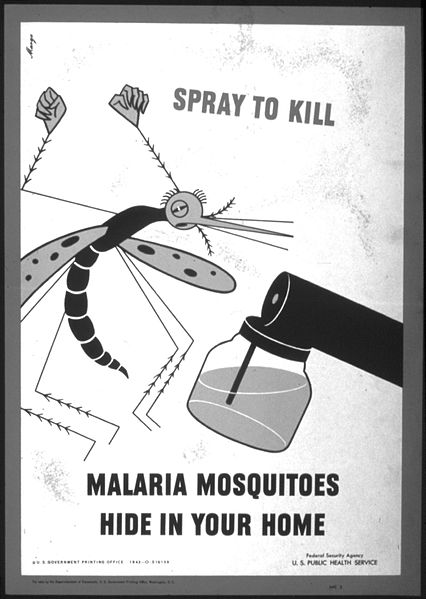
A 1943 anti-malaria poster, US Public Health Service

Friday, November 8, 2013

Holograms offer hope against malaria

A press release from the University of Edinburgh: Edinburgh scientists have developed a 3D filming technique that could inform research to stem the spread of malaria. Creating moving digital holograms of malaria sperm has given researchers fresh insights into the behaviour of these tiny life forms.

Understanding how malaria parasites mate could pave the way for improved prevention and control of this deadly disease, which poses a threat to half of the world’s population. Malaria parasites mate in the gut of mosquitoes, and people can catch the disease when they are bitten by these infected, blood-sucking insects.

Scientists from Edinburgh and the Rowland Institute at Harvard University were able to see that malaria sperm move in an irregular, lopsided corkscrew motion. This enables them to twist to the left or the right, as well as go forwards and backwards, and is thought to help the sperm swim between red blood cells to find female mates.

Malaria sperm use microscopic structures, known as flagella, to swim. These structures are important because they are used by many parasites to invade parts of the body. They also perform essential roles in embryonic development, reproduction, and nutrient uptake in all animals. Scientists say the simple structure of the malaria sperm makes it an excellent model system in which to study flagella in animals....

Electron micrograph of the delivery of a heme detoxification protein to the malaria parasite food vacuole. fv, food vacuole; fvm, fv membrane; hz, hemozoin; hdp, heme detoxification protein; tv, transport vesicle. Bar, 0.5 µm. The protein is labeled with a specific antibody bound to gold particles (immuno-electron microscopy). Shot by Jani D, Nagarkatti R, Beatty W, Angel R, Slebodnick C, Andersen J, Kumar S, Rathore D., Wikimedia Commons, under the Creative Commons Attribution 3.0 Unported license

Monday, September 30, 2013

Scientists turn data into disease detective to predict dengue fever and malaria outbreaks

Medical Xpress: Scientists from IBM are collaborating with Johns Hopkins University and University of California, San Francisco to combat illness and infectious diseases in real-time with smarter data tools for public health. The focus is to help contain global outbreaks of dengue fever and malaria by applying the latest analytic models, computing technology and mathematical skills on an open-source framework.

Vector-borne diseases, like malaria and dengue fever, are infections transmitted to humans and other animals by blood-feeding insects, such as mosquitoes, ticks and fleas.

Once thought to be limited geographically to the tropics or developing countries, they continue to show up all over the world and are among the most complex and dangerous infectious diseases to prevent and control. The rise of global transportation, trade and climate change allows insects to easily carry disease organisms across borders, infecting animals as well as humans. Dengue fever, for example, has spread to over 100 countries, including the United States, and malaria is responsible for over one million annual deaths. Finding and implementing new, innovative methods of predicting outbreaks is key to saving lives.

Epidemiologists rely on disease and vaccine simulations to determine the spread of global infection. Until recently, these models were hosted on closed systems and took years to produce due to inefficient data collection and lack of computing power. This approach to model development makes it too slow to respond on a timescale relevant to unexpected pandemics as large populations can be crippled by never before seen viruses or illnesses in a matter of days or weeks. Scientists need to understand not only the dynamics of the disease itself, but also the spread of insect vectors and contributing environmental factors....

A TEM micrograph showing Dengue virus virions (the cluster of dark dots near the center)

Thursday, August 29, 2013

A study finds that larvae control cuts malaria cases

Nick Kennedy in SciDev.net: Targeting mosquito larvae could cut malaria cases by up to 75 per cent in some sites, a review published today has found. The Cochrane review reports that a set of control methods, known collectively as larval source management (LSM), which kill mosquito larvae before they become malaria-carrying adults, could dramatically cut the disease's spread.

In some places, where the environmental conditions are right, this control method could reduce the number of people infected with the parasite by as much as 90 per cent, according to the review.

LSM techniques, which include draining land, adding larvicide to standing water or introducing animals that eat mosquito larvae, could boost malaria control efforts at a particularly challenging time for global malaria control.

"Malaria control is currently faced by various challenges, such as resistance to the main antimalarial drugs and insecticides, and new tools such as LSM are going to be increasingly needed," says lead author Lucy Tusting, a researcher from the London School of Hygiene & Tropical Medicine, United Kingdom.

Some malaria-endemic countries in Sub-Saharan Africa are already implementing LSM programmes, but there has been a lack of consensus on how effective the method is. Tusting and her team's report is the first large-scale review of the effectiveness of larval source management...

Mosquito larvae, shot by either Fir0002 or Fui in terra aliena (not sure which), Wikimedia Commons, under the Creative Commons Attribution-Share Alike 3.0 Unported license. Subject to disclaimers.

Thursday, August 15, 2013

Malaria vaccine shows promise

Charlene Porter in AllAfrica.com: U.S. government health researchers report some success in early human testing of a malaria vaccine. In a trial involving fewer than 60 patients, the vaccine cleared three important hurdles: it's safe for humans; it produces an immune response; and it offered malaria protection in adults.

Sanaria Inc., a biotechnology firm in Maryland, developed the vaccine in pursuit of its corporate mission devoted to cracking this scientific puzzle. The National Institute of Allergy and Infectious Diseases (NIAID), with collaborators from the Walter Reed Army Institute of Research and the Naval Medical Research Center, evaluated the Sanaria product at the National Institutes of Health (NIH) near Washington.

Fifty-seven healthy adults consented to be in what is called a Phase 1 trial. Among the volunteers, 40 participants received the vaccine and 17 did not. Making sure a vaccine is safe is one of the key objectives in a trial at this stage, so after the volunteers were vaccinated intravenously, the researchers let a week pass to see if adverse reactions emerged, or if any signs of malaria were induced by the vaccine.

The trial vaccine is known as PfSPZ, after Plasmodium falciparum, the most deadly of the malaria-causing parasites. PfSPZ is made from live but weakened sporozoites, the offspring of the infective malaria spores.

The NIAID volunteer patients showed no signs of the disease itself over that first week, and developed varying levels of antibodies against malaria, depending on the level of the PfSPZ dose they received….

Malaria is transmitted to people and animals by mozzies. Malarial sporozoites develop inside oocysts and are released in large numbers into the hemocoel of Anopheles stephensi mosquitoes. This false-colored electron micrograph shows a sporozoite migrating through the cytoplasm of midgut epithelia. Image by Ute Frevert; false color by Margaret Shear. Wikimedia Commons, under the Creative Commons Attribution 2.5 Generic license

Monday, April 29, 2013

Parasite 'resistant to malaria drug artemisinin'

Rebecca Morelle in the BBC: New drug-resistant strains of the parasite that causes malaria have been identified by scientists. Researchers found parasites in western Cambodia that are genetically different from other strains around the world.

These organisms are able to withstand treatment by artemisinin - a frontline drug in the fight against malaria. Reports of drug resistance in the area first emerged in 2008. The problem has since spread to other parts of South East Asia. The study is published in the journal Nature Genetics.

The lead author, Dr Olivo Miotto, of the University of Oxford and Mahidol University in Thailand, said: "All the most effective drugs that we have had in the last few decades have been one by one rendered useless by the remarkable ability of this parasite to mutate and develop resistance. "Artemisinin right now works very well. It is the best weapon we have against the disease, and we need to keep it."...

Wednesday, April 24, 2013

Forest conservation could reduce malaria transmission

María Elena Hurtado in SciDev.net: Preserving the biodiversity of tropical forests could have the added benefit of cutting the spread of malaria, according to a new study. The finding contradicts the traditional view that clearing native forest for agriculture curbs malaria transmission in the Amazon rainforest.

"Our study suggests, in contrast, that conservation of biodiversity can be reconciled with malaria control," Gabriel Zorello, an epidemiologist at Brazil's University of Sao Paulo and lead researcher of the study, tells SciDev.Net.

The researchers looked at two aspects that can affect malaria transmission in forested areas: the numbers of warm-blooded animals and the numbers of mosquitoes that do not carry malaria. Their study area was a large, sparsely-populated forested mountain range within the Atlantic Forest of southeastern Brazil. Warm-blooded animals live there, including medium-to-large birds such as toucans and quails, and mammals such as howler monkeys and squirrels.

No malaria cases have been reported on the mountain range in the past 30 years, but the primary malaria mosquito in the Atlantic Forest, Anopheles cruzii, lives nearby and could introduce the Plasmodium vivax parasite — associated with an estimated 80–300 million cases of malaria worldwide.

The researchers plugged real data from the area into a mathematical model of their own design to explore what would happen to malaria rates when the numbers of warm-blooded animals and non-malarial mosquitoes grew.

They found that the circulation of P. vivax is curbed when mosquitoes and animals are more abundant — suggesting that the mosquitoes compete with each other, and that the animals act as dead-end reservoirs of the malaria parasite. "These aspects of biodiversity that can hinder malaria transmission are services provided by the forest ecosystem," says Zorello....

Culex pipiens, shot by Alvesgaspar, Wikimedia Commons, under the Creative Commons Attribution-Share Alike 3.0 Unported license


Monday, March 4, 2013

Atlantic warming points to malaria risk... in India

Terra Daily via (AFP): Health watchdogs monitoring the risk of malaria in India should keep a close eye on what's happening thousands of kilometres (miles) away in the Atlantic, an unusual study published on Sunday suggests. The temperature of the sea surface in the tropical South Atlantic is a big determinant for levels of monsoon rain, which in turn is the big factor for malarial mosquitoes, it says.

Researchers led by Mercedes Pascual at the University of Michigan compared maps of monsoon rainfall and malaria epidemics in the desert fringe of northwestern India with a global map of sea-surface temperatures.

What struck them was a clear link between abnormally cold temperatures in the tropical South Atlantic in July and a regional increase in malaria in the ensuing September-December period. Previous research has suggested that the vast body of water in the Atlantic has a much bigger impact on the global climate system than thought.

When this volume of ocean warms or cools, it has a knock-on effect on adjoining seas. The transfer of heat has an impact on ocean circulation and rainfall, affecting for instance the relationship between the monsoon of the Indian Ocean and El Nino, the pendulum weather swing in the Pacific....

Histopathology of malaria exoerythrocytic forms in liver. Histopathology of malaria exoerythrocytic forms in liver. Parasite. Content Providers(s): CDC/Dr. Melvin Creation Date: 1973

Tuesday, October 30, 2012

Climate change adding sting to mosquito bite, says WHO report


The Economic Times (India): The warning is ominous — climate change and global warming will make vector-borne diseases like dengue and malaria - already causing havoc in the country more lethal. A landmark report on climate change and health, published by the World Health Organization on Monday, said that in the last 100 years, the world has warmed by approximately 0.75 degree Celsius. Over the last 25 years, the rate of global warming has accelerated, at over 0.18 degree Celsius per decade. Global health will suffer a loss of $2 billion-$4 billion per year by 2030 due to climate change.

Global warming, which has occurred since the 1970s, caused over 1.4 lakh excess deaths annually by 2004. "Many of the major killers such as diarrhoeal diseases, malnutrition, malaria and dengue are highly climate-sensitive and are expected to worsen as the climate changes," said WHO.

It added, "Malaria is strongly influenced by climate. Transmitted by Anopheles mosquitoes, malaria kills almost one million people every year. The Aedes mosquito vector of dengue is also highly sensitive to climate conditions. Studies suggest that climate change could expose an additional 2 billion people to dengue transmission by the 2080s."

WHO said over the last century, the surface area on which malaria remains a risk has been reduced from half to a quarter of the earth's landmass, but due to demographic changes the number of people exposed to malaria has increased substantially over the same period….

A World War II-era anti-malaria poster from the US

Monday, October 22, 2012

In vulnerable Greece, mosquitoes bite back

Kate Kelland in Reuters: Just when it seems things couldn't get any worse for Greece, the exhausted and indebted country has a new threat to deal with: mosquito-borne diseases. Species of the blood-sucking insects that can carry exotic-sounding tropical infections like malaria, West Nile Virus, chikungunya and dengue fever are enjoying the extra bit of warmth climate change is bringing to parts of southern Europe.

And with austerity budgets, a collapsing health system, political infighting and rising xenophobia all conspiring to allow pest and disease control measures here to slip through the net, the mosquitoes are biting back.

Already malaria, a disease eliminated from Greece in 1974, is not just returning with visitors and migrants - as it does from time to time in the rest Europe - but is being transmitted from person to person within Greek borders. This year's death toll from West Nile Virus, a disease spread by Culex modestus mosquitoes, stood at 16 on October 11.

It's a sign of the times that Medecins Sans Frontiers, a global medical charity more usually associated with the fight to save lives of babies in sub-Saharan Africa, is now working full time in parts of southern Greece....

The Parthenon, shot by Tormod, Wikimedia Commons, public domain