Friday, November 7, 2014

Fundamental change needed to save biodiversity

A press release from the Wildlife Conservation Society: When properly supported, protected areas are an invaluable tool in safeguarding biodiversity, says Dr. James Watson, Director of the Wildlife Conservation Society's Climate Change Program. But, he says with a group of colleagues in an article published Nov. 5 in Nature, only one in four is well managed. A fundamental change, they say, involving an increase in funding and a renewed political commitment is urgently needed to ensure that protected areas meet their full potential.

In advance of the paper's publication, Dr. Watson answered a few questions on the subject: What are the top three to five points you want people to take away from this Nature paper?

Protected areas (PAs), when well financed, and well resourced, work. Have a look at protected areas that save tigers, that save elephants, that sustain coral reef fisheries. They work becauce they stop destructive activities – plain and simple.

However, not all of them work. Only 20 percent of PAs are well managed which means 80 percent of PAs are not getting the funding they need. There is also clear evidence showing many nations around the world are backtracking their commitments towards PAs, leading to their delisting, degazetting and downsizing. These are not just in a few corrupt developing countries but the whole shabam – first world nations are leading the way in this poor behavior.

We need to recognize this backtrack. Tomeet the CBD commitments that nations have committed to, we need a step-change in terms of government commitment and funding. Money is important – and at about 70 billion dollars – doing the right thing is quite cheap (especially when one considers what we spend on the military). But is not simply about money … it’s about planning effectively. As the world’s population expands, as every nation on earth puts in place their economic development pathways, we need to actively and urgently identify those great landscapes and seascapes that are still functional, that still contain all of their species, and by their own nature make them resilient to climate change. We then need to actively seek their protection. We need to recognize that what we protect in the next 20 years counts the most because in 2030 there will be limited options for future appointments for PAs. The time to act is now....

A vernal pool in spring, US Fish and Wildlife photo

Thursday, November 6, 2014

Adaptation, mitigation activities can control climate change – IPCC report

EcoSeed: Climate change irreversible impacts to increase, however, there are options to adapt to climate change and stringent mitigation activities to manage it, finds new Intergovernmental Panel on Climate Change report.

The Synthesis Report, which sums and integrates the findings of the I.P.C.C. Fifth Assessment Report produced by 800 scientists..., is the most comprehensive assessment of climate change.

“Our assessment finds that the atmosphere and oceans have warmed, the amount of snow and ice has diminished, sea level has risen and the concentration of carbon dioxide has increased to a level unprecedented in at least the last 800,000 years,” said Thomas Stocker, co-chair of I.P.C.C. Working Group I.

The document reports with great certainty than in previous assessment the fact that emissions of greenhouse gases and other man-made drivers have been the dominant cause of observed warming since the mid-20th century.

According to the report, the more human activity disrupts the climate, the greater the risks. Continued GHG emissions will further warm and create long-lasting changes in all components of the climate system, increasing the likelihood of widespread and profound impacts affecting all levels of society.

“Adaptation can play a key role in decreasing these risks. Adaptation is so important because it can be integrated with the pursuit of development, and can help prepare for the risks to which we are already committed by past emissions and existing infrastructure,” said Vicente Barros, co-chair of I.P.C.C. Working Group II.

But adaptation alone is not enough. Substantial and sustained reductions of GHG emissions are at the core of limiting the risks of climate change, as it will not only reduce the rate and magnitude of warming, but also increase the time available for adaptation....

Wednesday, November 5, 2014

Study reveals startling decline in European birds

Terra Daily via SPX: Bird populations across Europe have experienced sharp declines over the past 30 years, with the majority of losses from the most common species, say the University of Exeter, the RSPB and the Pan-European Common Bird Monitoring Scheme (PECBMS) in a new study. However numbers of some less common birds have risen.

The study, published in the journal Ecology Letters, reveals a decrease of 421 million individual birds over 30 years. Around 90 percent of these losses were from the 36 most common and widespread species, including house sparrows, skylarks, grey partridges and starlings, highlighting the need for greater efforts to halt the continent-wide declines of our most familiar countryside birds.

Richard Inger from the University of Exeter said: "It is very worrying that the most common species of bird are declining rapidly because it is this group of birds that people benefit from the most."

"It is becoming increasingly clear that interaction with the natural world and wildlife is central to human wellbeing and significant loss of common birds could be quite detrimental to human society."

Birds provide multiple benefits to society. They help to control agricultural pests, are important dispersers of seeds, and scavenging species play a key role in the removal of carcasses from the environment. In addition, for many people birds are the primary way in which they interact with wildlife, through listening to bird song, enjoying the sight of birds in their local environment, feeding garden birds and through the hobby of bird watching....

A bird at the Nymphenberg Palace in Munich, shot by Tiia Monto, Wikimedia Commons, under the Creative Commons Attribution-Share Alike 4.0 International license

Tuesday, November 4, 2014

Does it help conservation to put a price on nature?

A press release from the University of Cambridge: Putting a price on the services which a particular ecosystem provides may encourage the adoption of greener policies, but it may come at the price of biodiversity conservation. Writing today (30 October) in the journal Science, Professor Bill Adams of the University’s Department of Geography argues that assigning a quantitative value to nature does not automatically lead to the conservation of biodiversity, and may in fact contribute to species loss and conflict.

While assigning a monetary value to the benefits of an ecosystem can be an essential tool in the environmental planning process, unequal access to those benefits, particularly where there are differences in wealth and power, can lead to poor trade-offs being made, both for the ecosystem itself and those who rely on it.

“Putting a price on what nature provides is not in itself a conservation measure,” said Adams. “There is a risk that traditional conservation strategies oriented toward biodiversity may not be effective at protecting the economic benefits of an ecosystem, and vice-versa.”

…The ways in which we depend on our natural environment are increasingly expressed as ‘ecosystem services’, or the range of benefits we get from nature for free. These benefits include the provision of food and clean water, erosion control and carbon storage. Quantifying the value of nature in this way is meant to allow policymakers to consider the potential economic and social impacts of altering a particular habitat.

This approach does sometimes lead to win-win scenarios, where the value of ecosystem services is dependent upon a high level of biodiversity. One example is in the coffee plantations of Costa Rica, where the retention of forest habitat in areas around the plantations doubled the amount of pest control of coffee berry borer beetle provided by birds, which benefitted the coffee farmers while protecting biodiversity.

However, consideration of ecosystem services when making decisions does not automatically lead to retention of biodiversity. “In many cases, trade-offs are made,” said Adams….

A misty morning, shot by FIR2002/flagstaffotos.com.au, Wikimedia Commons, under the Creative Commons 3.0 license

Monday, November 3, 2014

Domestic climate change study paints bleak picture for Vietnam

Bao Cam in Thanh Nien News: Vietnam is suffering increasing damage from climate change, according to a recent report by a parliamentary committee. A report by the Committee of Science, Technology and Environment presented to the National Assembly, Vietnam’s legislature, showed that Vietnam is among the countries to be hit hardest by climate change in the coming years.

Natural disasters have cost the country around 1.5 percent of its annual gross domestic product (GDP) in the past two decades, the report said, citing findings of a study conducted by the committee. Typhoon Xangsane, for example, caused US$1.2 billion of damage in the central region in 2006.

Officials said Vietnam has yet to become a major greenhouse gas emitter, but its emissions continue to rise. “The threat of climate change has grown more vivid in Vietnam over the past 50 years,” the report said. “The average temperature increased by 0.5 degree Celsius, the sea rose more than 0.2 meters, natural disasters, floods and typhoons grew stronger and left many dykes became more vulnerable,” it said.

“Flooding caused by high tide has worsened in Ho Chi Minh City, Can Tho, and the Mekong Delta’s Ca Mau and Vinh Long provinces.” According to the report, areas suffering from the salinization of ground water and/or desertification have expanded due to rising temperatures....

Flood in Vietnam, 2011, shot by European Commission DG Echo, Wikimedia Commons via Flickr, under the Creative Commons 2.0 license

Climate-driven migration increasing disease burden in Ethiopia

Thomson Reuters Foundation: ...Experts have linked more irregular rainfall and crop failures to a rise in migrant workers in Ethiopia. Meteorologists said Maksegnit, in the highlands, should record as much as 1,059 millimeters of rainfall during the peak season, but in the last few years rainfall has been as low as 317 millimeters.

That has led to a decline in staple crop farming, while cash crop farming in the lowlands pulls the struggling poor from the highlands, and toward new health threats.

Changing climatic conditions also are changing the range of the sandflies, said Daniel Argaw Dagne, of the leishmaniasis control programme at the World Health Organization. “Kalaazar is a vector borne disease that can be influenced by climate change,” he said. “Global warming affects the distribution and growth of vectors.”....

An Ethiopian farm compound, shot by by A. Davey, Wikimedia Commons via Flickr, under the Creative Commons 2.0 license

Nepal disaster preparedness needs to go local

IRIN: Mid-summer monsoon rains in Nepal triggered over three dozen floods and landslides, killing over 200 people and displacing tens of thousands. Experts say this highlights preparedness and response challenges and the urgent need for these to be prioritized in development plans and at local government level.

"There was nothing unpredictable about this summer's events in Nepal," Moira Reddick, coordinator at Nepal Risk Reduction Consortium (NRRC), a coalition of humanitarian, development, financial and government bodies, told IRIN.

"Until we see investments effectively risk managed and centred into development planning across all sectors of government and international community, we won't start to see the kind of revolution we need in terms of disaster management, risk-proofing and effective preparedness," she said.

Nepal's Ministry of Home Affairs put the number of people dead between June and September due to floods and landslides at 265, with 256 missing and 157 injured. A landslide on 2 August was the deadliest in the country's history. According to the International Federation of Red Cross and Red Crescent Societies (IFRC), monsoon disasters in 2014 affected over 200,000 people across Nepal and displaced more than 34,000.

Humanitarians point to a 2008 flood in the River Koshi, which killed several hundred and displaced nearly 60,000 families, as a turning point for Nepal's disaster mitigation and response work....

A 2013 flood in the Darchula district of Nepal, shot by Krish Dulal, Wikimedia Commons, under the Creative Commons Attribution-Share Alike 3.0 Unported licens

Italy ignores pleas, ends boat migrant rescue operation

Terra Daily via AFP: Italy on Friday ignored the pleas of aid agencies and confirmed the end of its search and rescue operation "Mare Nostrum", responsible for saving tens of thousands of boat migrants stranded in the Mediterranean.

"From tomorrow a new operation called 'Triton' begins," deputy prime minister and interior minister Angelino Alfano told journalists at a press conference, referring to a much more limited mission led by the EU border agency Frontex. "Mare Nostrum ends. Italy has done its duty,"

He said the government had spent some 114 million euros ($142 million) on the massive naval operation since two deadly shipwrecks in October last year left over 400 people dead.

The decision comes after growing criticism both within Italy and Europe that the rescue mission was creating an unintended "pull factor" for more migrants in makeshift boats to attempt the dangerous sea crossings.

Although the op -- which has saved over 150,000 people -- is being shelved, Italy said it will abide by the laws of the sea under which ships that spot migrants in trouble are obliged to rescue them....

A 1945 boat rescue in the Mediterranean by the UK, not Italy

Saturday, November 1, 2014

Overcoming Ebola stigma takes time

IRIN: Ebola survivors in Liberia and Sierra Leone are facing mixed reactions as they return home after contracting the deadly virus. While some have been welcomed back into their communities, most are facing discrimination and stigmatization, or have even been shunned.

"I returned back to the community very happy," said Ibrahim Thomas, who lives in Freetown. "I didn't have any problems with the community or anybody. The worshippers at my mosque used to pray for me [when I was sick], so when I came back, they were so happy to see me alive and well."  Thomas, who lost his wife and two of his children to Ebola, said many of his neighbours have been sympathizing with him and doing what they can to help.

But not all survivors are so lucky. "I was devastated when I returned to my community," said 27-year-old Alhaji Bangura, who lost both parents, his wife and two children to Ebola in Sierra Leone. "I was very lucky to survive. but now some people are still afraid of me, even to come very close to me. I had so many friends before but now most of them have distanced themselves from me."  Bangura said most people will only talk to him outside their home and often refuse to give him any food or drink....

Scanning electron micrograph of Ebola virus budding from the surface of a Vero cell (African green monkey kidney epithelial cell line). Credit: NIAID, Wikimedia Commons via Flickr, under the Creative Commons Attribution 2.0 Generic license

A closer look at ‘climate refugees’

Max Martin in SciDev.net: On the sidelines of last month’s international conference on small island developing states (SIDS) in Samoa, Kiribati’s president, Anote Tong, said: “I have never encouraged the status of our people being refugees.”

It was a strong denial of the term ‘climate refugee’, which appears in media stories
galore. Sadly, such stories often portray the risk of displacement for inhabitants of Pacific island states such as Kiribati and Samoa in a way that is reminiscent of cartoons of a shipwrecked man on a desert island. Of course, we should not dismiss the threat of sea-level rise. Numerous low-lying islands, deltas and coastlines could lose land not only as a direct impact of it, but also due to increased erosion and wave impacts.

Yet in reality, it is not solely the prospect of the edges of their homelands sinking that drives people from islands, as new research shows. A study led by Robert Stojanov of Charles University in Prague, Czech Republic analysed key environmental factors considered to influence population movement in Tuvalu. They found that, though this Pacific island state is threatened by sea-level rise, many other factors including water insecurity, some of which interact with climate change, drive large population movements.

The authors examined existing types of environment-related migration and displacement — namely migration for economic reasons and displacement due to development projects, as well as events such as rising sea level and cyclones.

Their study shows that Tuvaluans who can foresee climate and environment-related impacts get enough time to plan their movements. But other research shows that sometimes people are forced to move without such plans because they experience events such as unusually high tides — known locally as ‘king tides’ — that increasingly inundate parts of the islands....

Funafuti Atoll in Tuvalu, shot by Stefan Lins, Wikimedia Commons via Flickr, under the Creative Commons 2.0 license

Rains slow Sri Lankan landslide search; nearly 150 feared dead

Reuters: Heavy rains hampered search operations on Friday at the site of a landslide in Sri Lanka where more than 100 people were buried under tons of mud and rubble two days ago. Fears of further landslips in the rain-sodden hills around the tea-plantation village of Haldummulla also slowed efforts to recover the dead, after a disaster that has brought offers of assistance from neighbour India and the United States.

Officials had originally put the death toll from Wednesday's landslide at more than 300 but reduced it after it emerged that many schoolchildren and plantation workers had been at a safe distance when the avalanche engulfed their homes. Latest data fron Sri Lanka's Disaster Management Centre showed that 183 people had survived out of a total of 330 who lived in the area in south-central Sri Lanka.

As soldiers and police worked to clear mounds of earth, survivors were housed in two temporary camps set up nearby. Disaster Management Minister Mahinda Amaraweera told parliament the cabinet had decided to help them build new homes in a safe location.

A local resident told Reuters around 150 clay and cement houses had been buried in the landslide, which was 3 km (2 miles) long and was triggered by days of heavy monsoon rains. Ravichandran Gajini, 14, said her parents had left their house before the landslide but hurried back in to retrieve documents....

Dartmouth study finds restoring wetlands can lessen soil sinkage, greenhouse gas emissions

EurekAlert via Darmouth College: Restoring wetlands can help reduce or reverse soil subsidence and reduce greenhouse gas emissions, according to research in California's Sacramento-San Joaquin River Delta by Dartmouth College researchers and their colleagues.

The study, which is one of the first to continually measure the fluctuations of both carbon and methane as they cycle through wetlands, appears in the journal by Global Change Biology.

Worldwide, agricultural drainage of organic soils has resulted in vast soil subsidence and contributed to increased atmospheric carbon dioxide concentrations. The California Delta was drained more than a century ago for agriculture and human settlement and has since experienced subsidence rates that are among the highest in the world. It is recognized that drained agriculture in the Delta is unsustainable in the long-term. To help reverse subsidence and capture carbon, there is interest in restoring drained agricultural land-use types to flooded conditions, but flooding may increase methane emissions. Carbon dioxide is the primary greenhouse gas emitted through human activities, but pound for pound, methane's impact on climate change is more than 20 times greater than carbon dioxide.

Researchers at Dartmouth, UC-Berkeley and UC-Davis installed monitoring equipment on three moveable four-meter towers, measuring carbon dioxide and methane concentrations above a pasture and a cornfield that had been drained and a flooded rice paddy, a newly restored wetland and a wetland that underwent restoration in 1997. They found that the drained sites were net carbon and greenhouse gas sources. Conversely, the restored wetlands were net sinks of atmospheric carbon dioxide, but they were large sources of methane emissions, says co-author Jaclyn Hatala Matthes, an assistant professor an assistant professor in Dartmouth's Department of Geography. "However, we do expect that the methane emissions will stabilize over time," she says. "We've seen that emissions tend to increase for the first few years, and that this increase is correlated with the increase in wetland plant growth and spread during this time."...

A brown swamp, shot by the US Fish and Wildlife Service

Friday, October 31, 2014

Californians will pay more for water, must still conserve

Reuters: Californians face higher water prices and permanent conservation measures amid drought, global warming and population growth in a state that has long struggled to satisfy urban and agricultural needs, the administration of Governor Jerry Brown said Thursday.

It will take up to $500 billion to improve the state's water infrastructure to improve supplies, reduce flood risk and shore up the fragile ecosystems that provide water for people, farms and wildlife, the state's top natural resources officials said in a long-awaited update to California's water plan.

"Water is going to cost more for Californians in the future," said Mark Cowin, director of the state department of water resources, in a conference call with reporters on Thursday. "That's a reality we're all going to have to get used to."

California is in its third year of a catastrophic drought that has dried up wells and forced farmers to leave fields fallow. But the state has long struggled to meet the water needs of thirsty cities and its mammoth agricultural sector, prompting a century of political fights between the wetter north and the drier south….

A shot of a parched California field from Marine One, White House photo

Thursday, October 30, 2014

Uzbekistan calls for help over disappearing Aral Sea

Terra Daily via AFP: Uzbekistan on Wednesday called for more international help over the shrinking of the Aral Sea, after recent images showed part of the lake had dried up completely. In an environmental catastrophe that haunts Central Asia, the Aral Sea on the border of Uzbekistan and Kazakhstan has been ravaged due to Soviet irrigation projects dating back to the 1960s.

Last month NASA said satellite imagery showed that the southern basin of the lake, once the world's fourth-largest inland body of water, had completely dried up "for the first time in modern history". Veteran Uzbek President Islam Karimov called on an international conference of experts and donors to come up with more aid to counter the devastation caused by the disappearance of the lake.

"The countries of the region do not have sufficient funds and logistical means to overcome the environmental, socio-economic and humanitarian consequences of the disaster," Karimov wrote in an appeal. "Today the Aral Sea is on the verge of extinction. This loss will affect the lives of millions of people in Uzbekistan and abroad," UN chief Ban Ki-moon said in a video address....

A stranded ship in the Aral Sea, shot by Staecker, public domain 

World losing 2,000 hectares of farm soil daily to salt-induced degradation

A press release from United Nations University: Salt-spoiled soils worldwide: 20% of all irrigated lands — an area equal to size of France; Extensive costs include $27 billion+ in lost crop value / year. UNU study identifies ways to reverse damage, says every hectare needed to feed world’s fast-growing population.

Every day for more than 20 years, an average of 2,000 hectares of irrigated land in arid and semi-ari
d areas across 75 countries have been degraded by salt, according to a new study — Economics of Salt-induced Land Degradation and Restoration — published today by the UNU Institute for Water, Environment and Health (UNU-INWEH).

Currently an area the size of France is affected — about 62 million hectares (20 percent) of the world’s irrigated lands, up from 45 million hectares in the early 1990s. Salt-induced land degradation occurs in arid and semi-arid regions where rainfall is too low to maintain regular percolation of rainwater through the soil and where irrigation is practiced without a natural or artificial drainage system.

Irrigation practices without drainage management trigger the accumulation of salts in the root zone, affecting several soil properties and reducing productivity. “To feed the world’s anticipated nine billion people by 2050, and with little new productive land available, it’s a case of all lands needed on deck,” says principal author Manzoor Qadir, Assistant Director of the Water and Human Development programme at UNU-INWEH. ”We can’t afford not to restore the productivity of salt-affected lands.”

Zafar Adeel, Director of UNU-INWEH, notes that the UN Food and Agriculture Organization projects a need to produce 70 percent more food by 2050, including a 50 percent rise in annual cereal production to about 3 billion tonnes....

Campbell's River in the Murray-Darling Basin, shot by Rangasyd, Wikimedia Commons, under the Creative Commons Attribution-Share Alike 3.0 Unported license 

India's Gujarat state braces for Cyclone Nilofar

BBC: Authorities in India have begun evacuating tens of thousands of people as a powerful cyclone heads for the western coast. Cyclone Nilofar, categorised as "severe" by weather forecasters, is expected to hit Gujarat state on Saturday morning.

India's Meteorological Department has predicted the storm will bring winds of up to 130km/h (80 mph). Rescue and relief teams have been deployed and the army is on stand-by.

A super-cyclone in 1999 killed more than 10,000 people in eastern Orissa state. Earlier this month, Cyclone Hudhud pounded India's eastern coast, killing more than 40 people, causing extensive damage and prompting the evacuation of some 350,000 people.

Cyclone Nilofar is also expected to pass around 250km (155 miles) from Karachi, Pakistan's biggest city, local weather officials said.

Pakistan's National Disaster Management Authority has told officials to prepare to evacuate villages along the coast and close beachside restaurants. Authorities in Gujarat's coastal Kutch district, where the cyclone is expected to make landfall, have begun evacuating more than 30,000 people from the area, senior local official MS Patel told the AFP news agency...

NASA image of Cyclone Nilofar in the Arabian Sea, October 29, 2014

Upgrading infrastructure could reduce future flood damage

A press release from the University of Colorado: The severe flooding that devastated a wide swath of Colorado last year might have been less destructive if the bridges, roads and other infrastructure had been upgraded or modernized, according to a new study from the University of Colorado Denver.

“People need to understand the importance and seriousness of infrastructure,” said Jimmy Kim, PhD, associate professor of structural engineering at the CU Denver College of Engineering and Applied Science and lead author the study. “There is an assumption that a bridge will stand forever and that’s simply not true.”

Kim along with co-authors Wesley Marshall, PhD, PE and Indrani Pal, PhD, both assistant professors of civil engineering at CU Denver, the leading public research college in Denver, examined the causes of the flooding and its impact on infrastructure.

...The rain began on Sept. 9, 2013 and didn’t stop until the 16th. In just days, places like Boulder County received three-quarters of its yearly precipitation. Bridges collapsed, roads failed and homes were swept away. According to the study, 120 bridges now need structural repair. Many were damaged by rushing water which washed out backfill soil and exposed bridge foundations.

Kim said new `scour control’ methods, aimed at reducing these washouts, should be developed to help bridges withstand future flooding. “You can do that by upgrading existing piers (columns) supporting the bridge or changing current design approaches” he said. “The Colorado Department of Transportation is currently working on improving scour design for bridge structures.”

...In Colorado, the report card says, 70 percent of major roads are poor or mediocre and 566 bridges are structurally deficient. “Reconstruction is very expensive and should be the last resort,” Kim said. “But we can repair or strengthen existing systems less expensively. We are looking at a growing national problem, one that will only get worse if we ignore it.”...

Colorado National Guard in the 2013 floods, US Department of Defense photo

Nearly 25 million food insecure in Sahel

IRIN: Food security and malnutrition rates across the Sahel are deteriorating, due in large part to ongoing conflict and instability in the Central African Republic (CAR), northern Mali, and northeast Nigeria, according to the UN Office for the Coordination of Humanitarian Affairs (OCHA).

Nearly five million more people have joined the ranks of the food insecure since the beginning of the year, bringing the estimated total to 24.7 million - more than double the number in 2013, says OCHA.  "The dramatic rise in insecurity across the region over the last year has generated a tremendous number of people that need to be fed and housed and given health care, because they've been ripped from their livelihoods, as well as their homes," said Robert Piper, the UN regional humanitarian coordinator for the Sahel. "It has also, of course, had an impact on the market and some food prices."

Some 6.5 million people have crossed the emergency threshold from being moderately food insecure to facing an acute food and livelihood crisis. This is four million more people in this category than in January.

"There's a big difference between Phase 2 [moderately food insecure], where you are food insecure but using coping mechanisms to deal with it, and Phase 3 [acute food and livelihood crisis], where you have started to use negative coping mechanisms that have potentially very long-term negative consequences," Piper said.

Negative coping mechanisms include taking out a loan that must be repaid from profits from the following year's harvest, eating seeds that should be saved for next year's planting season, and reducing the number of daily meals from three down to two, or even one....

The road to Timbuktu in Mali, shot by Annabel Symington, Wikimedia Commons via Flickr, under the Creative Commons 2.0 license 

Monday, October 27, 2014

No-till agriculture may not bring hoped-for boost in global crop yields

A press release from the University of California-Davis: No-till farming, a key conservation agriculture strategy that avoids conventional plowing and otherwise disturbing the soil, may not bring a hoped-for boost in crop yields in much of the world, according to an extensive new meta-analysis by an international team led by the University of California, Davis.

As the core principle of conservation agriculture, no-till has been promoted worldwide in an effort to sustainably meet global food demand. But after examining results from 610 peer-reviewed studies, the researchers found that no-till often leads to yield declines compared to conventional tillage systems. It still shows promise for yield gains in dryland areas, however.

...“The big challenge for agriculture is that we need to further increase yields but greatly reduce our environmental impacts,” said Cameron Pittelkow, who co-authored the study as a postdoctoral scholar at UC Davis and is now on the faculty of the University of Illinois.  “The common assumption that no-till is going to play a large role in the sustainable intensification of agriculture doesn’t necessarily hold true, according to our research findings.”

...The goals of conservation agriculture are to improve long-term productivity, profits and food security, particularly under the threat of climate change. Because conservation agriculture avoids tillage, it is less time-consuming and can be more cost-effective than conventional farming methods. In recent years, however, there has been some disagreement about the impact of no-till farming practices on yield.

...In regions with moist climates and sufficient precipitation, no-till farming actually resulted in yields that were on average 6 to 9 percent lower than with conventional tillage methods. “No one has ever stated that there would be a significant decline like this,” said Chris van Kessel, a professor of plant sciences at UC Davis and co-author of the study. “Our findings suggest that broad implementation of conservation agriculture may not be warranted in all areas, particularly where residue retention and crop rotation practices are hard to implement.” ...

No-till farming, such as used in this Illinois soybean field, shows promise in dry regions but causes lower yields in cold, moist areas like Northern Europe, a new study finds. (Paige Buck/USDA NRCS Illinois photo)

Friday, October 24, 2014

India’s largest dam given clearance but still faces flood of opposition

Janaki Lenin’s India Untamed via the Guardian (UK): Six years ago, former Indian prime minister Manmohan Singh laid the foundation stone for the 3,000MW Dibang multipurpose dam project. The dam, to be built across the Dibang river, in the north-eastern state of Arunachal Pradesh, will be the country’s largest. The state plans to build more than 160 dams in the coming years.

Dibang dam will not only generate power but supposedly control floods in the plains of neighbouring Assam state. The dam’s reservoir was estimated to submerge 5,000 hectares (12,000 acres) of dense forests along the Dibang river valley. The forest advisory committee (FAC), which examines the impact of infrastructure projects on wilderness areas, was appalled and rejected it.
For a project so large, the environmental impact assessment (EIA) failed to assess critical components of the project and was widely criticised for inadequately predicting the dam’s effects on the environment. Its evaluation of impacts on wildlife is a farce. The authors of the document list creatures not found in that area, such as Himalayan tahr, and concocted species not known to exist anywhere in the world, such as brown pied hornbill. Of the ones they could have got right, they mangled the names, referring to flycatchers as ‘flying catchers’ and fantail as ‘fanter’.

In his scathing critique, Anwaruddin Choudhury, an expert on the wildlife of north-east India, sarcastically concluded the EIA makes a case for the project to be shelved, as Dibang was the only place in the world “with these specialities!” Despite listing these amazing creatures, the EIA goes on to say “no major wildlife is observed”.

In a similar vein, the document claims only 301 people will be affected by the dam. Authorities must be puzzled that a project with so few affected people should be opposed by so many. Protests by local people began soon after the inaugural stone was laid in 2008. Since then large crowds have disrupted public hearings. On 5 October 2011, police fired on one such mass demonstration, injuring 10 people. Regional authorities branded anti-dam protestors as Maoist rebels, further angering them....

Tehri Dam in India, shot by Arvind Iyer, Wikimedia Commons via Flickr,  under the Creative Commons Attribution-Share Alike 2.0 Generic license

Ebola workers urge safety, solidarity

IRIN: Hanna Majanen summed it up best: "It is the things you do automatically that are difficult. People will touch their face, rub their eyes and bite their fingernails. These are the things you forget.”

As medical focal point for Médecins Sans Frontières (MSF) in Liberia, Majanen is well-versed in the rules and recommendations laid down by the organization for its frontline workers treating Ebola patients.

MSF, along with organizations like the World Health Organization (WHO) and the US Centers for Disease Control and Prevention (CDC), has urged health workers to get as close as they can to a "zero risk" working environment. That means not only following strict procedures on wearing personal protection equipment (PPE) and ensuring maximum standards of hygiene in every aspect of work, but ensuring psychological back-up for those treating Ebola patients, and limiting rotations.

The US-based NGO International Medical Corps (IMC), expanding its Ebola activities in Liberia, provides a five-day pre-deployment training programme for recruits with a strong focus on PPE, emphasizing that IMC prides itself on taking care of the "wellness, safety and security of all individuals".

 Health workers have always been among the fatalities in Ebola outbreaks, notably in Sudan and the then Zaire where the virus first came to light in 1976. But the West Africa epidemic highlighted their extreme vulnerability. According to WHO, in its Ebola Response Roadmap Situation Report for 8 October, some 401 health workers had contracted Ebola, with 232 confirmed or suspected deaths…

A new Ebola isolation war in Lagos, shot by Bryan Christensen, Wikimedia Commons via Flickr, under the Creative Commons Attribution 2.0 Generic license.

Newly discovered microbe Is key in climate change

Daniel Stolte at the University of Arizona News: Tiny soil microbes are among the world's biggest potential amplifiers of human-caused climate change, but whether microbial communities are mere slaves to their environment or influential actors in their own right is an open question. Now research by an international team of scientists from the U.S., Sweden and Australia, led by University of Arizona scientists, shows that a single species of microbe, discovered only recently, is an unexpected key player in climate change.

The findings, published in the journal Nature, should help scientists improve their simulations of future climate by replacing assumptions about the different greenhouse gases emitted from thawing permafrost with new understanding of how different communities of microbes control the release of these gases.

Earlier this year, the international team discovered that a single species of microbe, previously undescribed by science, was prominent in permafrost soils in northern Sweden that have begun to thaw under the effect of globally rising temperatures. Researchers suspected that it played a significant role in global warming by liberating vast amounts of carbon stored in permafrost soil close to the Arctic Circle in the form of methane, a powerful greenhouse gas trapping heat in the Earth's atmosphere. But the actual role of this microbe — assigned the preliminary name Methanoflorens stordalenmirensis, which roughly translates to "methane-bloomer from the Stordalen Mire" — was unknown.

The new research nails down the role of the new microbe, finding that the sheer abundance of Methanoflorens, as compared to other microbial species in thawing permafrost, should help to predict the collective impact on future climate change.
"If you think of the African savanna as an analogy, you could say that both lions and elephants produce carbon dioxide, but they eat different things," said senior author Scott Saleska, an associate professor in the UA’s Department of Ecology and Evolutionary Biology and director of the UA's new Ecosystem Genomics Institute. "In Methanoflorens, we discovered the microbial equivalent of an elephant, an organism that plays an enormously important role in what happens to the whole ecosystem."…

"Autumn landscape with fox," Bruno Liljefors - Bukowskis,public domain

Global consumption an increasingly significant driver of tropical deforestation

Karin Ljungklint at Chalmers University: International trade with agricultural and wood products is an increasingly important driver of tropical deforestation. More than a third of recent deforestation can be tied to production of beef, soy, palm oil and timber. “The trend is clear, the drivers of deforestation have been globalized and commercialized”, says assistant professor Martin Persson, Chalmers University of Technology.

In a report commissioned by US think-tank Center for Global Development (CGD) Mart
in Persson and colleagues in Linköping, Sweden, and Vienna, Austria, have investigated to which extent international trade in agricultural and silvicultural products drives deforestation in seven case countries: Argentina, Bolivia, Brazil, Paraguay, Indonesia, Malaysia and Papua New Guinea.

“From having been caused mainly by smallholders and production for local markets, an increasing share of deforestation today is driven by large-scale agricultural production for international markets. More than a third of global deforestation can be tied to rising production of beef, soy, palm oil and wood products,” says Martin Persson. “If we exclude Brazilian beef production, which is mainly destined for domestic markets, more than half of deforestation in our case countries is driven by international demand.”

The research group has also analyzed the magnitude of the associated carbon dioxide emissions embodied in these trade flows. In total 1.7 billion tons of carbon dioxide emissions can be linked to the production of the analyzed commodities, with one third being embodied in commodity exports. The biggest recipients of these embodied carbon emissions are China and the EU. By elucidating the links between consumption and environmental impacts, the aim is to identify more effective measures to address tropical forest loss by targeting key commodities and countries.

“Another key trend is that more and more corporations have pledged to rid their supply chains from deforestation. Pushed by environmental organizations and seeing the risks of being associated with environmental destruction, companies like Unilever and McDonalds are pressuring their suppliers to stop expanding production on forest land,” says Martin Persson.

It is no longer enough to just focus on the countries where deforestation happens and the potential policy measures available there, he adds….

Infographic from the Chalmers University website, via the Center for Global Development

Thursday, October 23, 2014

UN proposal of debt relief for climate adaptation divides aid experts

Karl Mathieson in Climate Change Hub at the Gurdian (UK): A UN proposal that would see small island states offered debt relief to pay for climate change contains a “fundamentally unjust” blind spot, according to development groups. But advocates see the idea as an innovative way to increase the money available for climate change adaptation in the most vulnerable states.

The UN Development Programme (UNDP) is working on an initiative that would see rich countries write off debt owed to them by Small Island Developing States (Sids) in exchange for the money being spent on climate change adaptation.

But development agencies are concerned the proposal conflates legitimate and illegitimate debt. Tim Gore, Oxfam’s global head of policy for food and climate change says: “They are two separate issues and just merging the two, you could argue, is one way to let developed countries off the hook.”

“It’s definitely an interesting proposal, but I think it’s fundamentally unjust,” says Alex Scrivener, a policy officer for the World Development Movement. “There’s a big difference between the climate debt accrued by rich countries as a result of their emitting CO2 over a long period of time and the often unjust debt which has been accrued by poorer countries,” he says.

Unjust debt, says Scrivener, is often “dictator debt” – money lent by rich countries to poor countries ruled by strongmen, who commonly used it to finance military ventures or vast follies. It is estimated at US$735bn and makes up almost one fifth of the total debt owed by the developing world. But the only Sids with dictator debt is Haiti, says Gail Hurley, a UNDP development finance specialist....

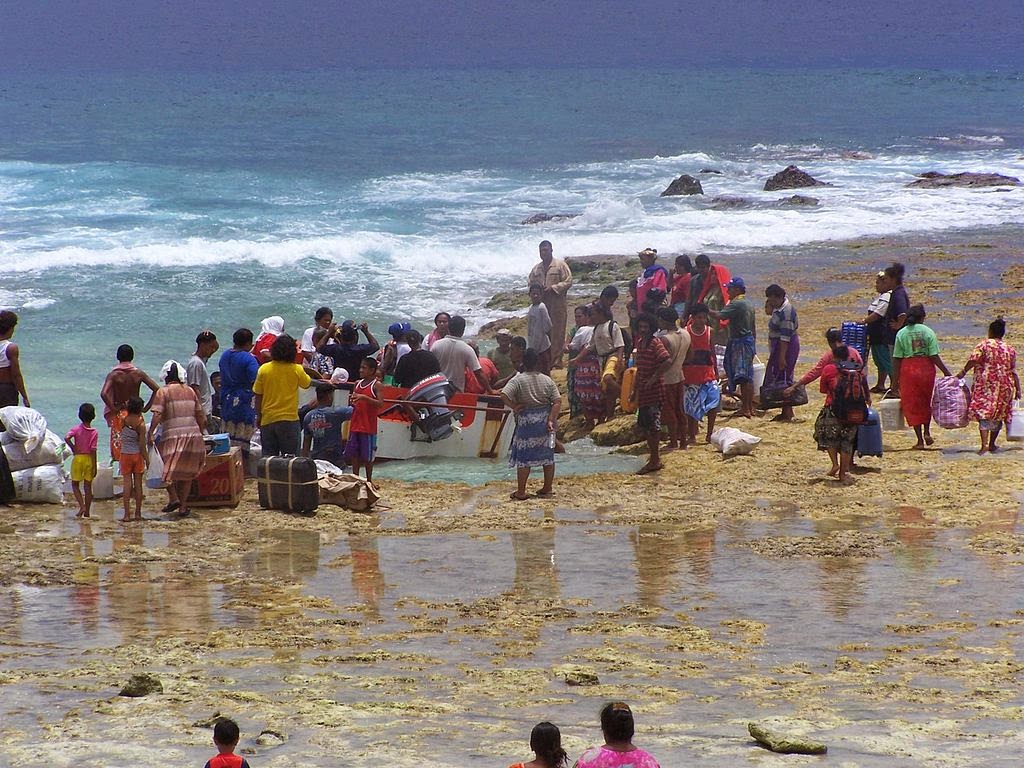
Cargo is offloaded from tenders that transfer passengers & cargo between the inter-island ferries and each of the outer islands of Tuvalu (here on the island of Niutao). A hazardous exercise, fraught with risk for passengers & the crew of the tenders. Shot by CESQLD, public domain

First-of-its-kind report ranks US insurance companies on climate change responses

A press release from Ceres: Amid growing evidence that climate change is having wide-ranging global impacts that will worsen in the years ahead, a new report from Ceres ranks the nation's 330 largest insurance companies on what they are saying and doing to respond to escalating climate risks. The report found strong leadership among fewer than a dozen companies but generally poor responses among the vast majority.

The report, Insurer Climate Risk Disclosure Survey Report & Scorecard: 2014 Findings & Recommendations, ranks property & casualty, health and life & annuity insurers that represent about 87 percent of the total US insurance market. The companies were ranked on a half-dozen climate related indicators, including governance, risk management, investment strategies, greenhouse gas management and public engagement (such as their climate policy positions.) The report is based on company disclosures last year in response to a climate risk survey developed by the National Association of Insurance Commissioners (NAIC).

“Despite being on the 'front line' of climate risks, most of the company responses show a profound lack of preparedness in addressing climate-related risks and opportunities,” said Mindy Lubber, president of Ceres, a nonprofit sustainability advocacy group. “A big positive in the report's findings is the strong leadership among a small number of property & casualty insurers – a trend that needs to become far more mainstream if the industry is to accelerate global responses to this colossal threat.”

The companies were ranked on a four-tier scoring system, based on a 100-point scale, that included "Leading," "Developing," "Beginning" and "Minimal" grades. Nine of the 330 companies – three percent overall – received the “Leading” rank, including ACE, Munich Re, Swiss Re, Allianz, Prudential, XL Group, The Hartford, Sompo Japan and Zurich. The Hartford and Prudential are the only U.S.-headquartered insurers among the nine firms.

The vast majority of the insurers – 276 of the 330 companies – earned “Beginning” or “Minimal” ratings. The heath and life & annuity insurers had especially weak responses, with 89 percent and 80 percent, respectively, receiving the lowest “Minimal” rating....

“As key regulators of this sector, we strongly encourage insurance industry leaders and investors who own these companies to take this challenge far more seriously,” said Washington Insurance Commissioner Mike Kreidler, who wrote the report foreword and chairs the NAIC’s Climate Change and Global Warming Working Group. “The insurance industry is uniquely positioned as the bearer of risk to make adjustments now to lessen dramatic impacts we know are coming. This is not a partisan issue, it’s a financial solvency issue and a consumer protection issue.”

The 2007 flooding of the Kishwaukee River in DeKalb, Illinois, shot by IvoShandor, Wikimedia Commons, under the Creative Commons 3.0 license

Wednesday, October 22, 2014

Brazil protects giant swathe of Amazon rainforest

Reuters: The Brazilian government said on Tuesday it has put an environmentally rich area of the Amazon rainforest under federal protection, creating a reserve larger than the U.S. state of Delaware.

The new reserve, called Alto Maues, has 6,680 square km (668,000 hectares or 1.65 million acres) of mostly untouched forests that are not known to have human presence, the Brazilian Environment Ministry said. Declaring a federal reserve means forest clearing and similar development are forbidden.

Putting large areas of mostly intact rainforest under federal protection is one of the tools the Brazilian government has to combat deforestation and reduce its greenhouse gas emissions. The creation of these reserves is part of the country's climate policy. Deforestation is the main cause of carbon emissions in Brazil, unlike most countries where the burning of fossil fuels leads emissions.

The decree creating the reserve was eagerly expected by environmental groups. "This is essential to protect unique Amazon species, such as
some types of primates," said Mauro Armelin, a conservationist working for the local office of the World Wildlife Fund (WWF)....

Amazon rainforest, shot by Neil Palmer (CIAT), Wikimedia Commons via Flickr, under the Creative Commons 2.0 license 

In disease outbreak management, flexibility can save lives and money

EurekAlert via Penn State: A new approach for responding to and managing disease outbreaks is being proposed by a team of epidemiologists led by two Penn State University researchers. The team's flexible approach could save many lives and millions of dollars.

The approach, called "adaptive management," allows decision-makers to use knowledge they gain during an outbreak to update ongoing interventions with the goal of containing outbreaks more quickly and efficiently. Current efforts to prevent or stem such outbreaks may fall short because of uncertainty and limited information about the real-time dynamics of the specific disease outbreak. The researchers have written a scientific paper on this adaptive management approach that will be published on 21 October in the open-access journal PLOS Biology.

"Responders often have incomplete information during a disease outbreak," said Katriona Shea, professor of biology at Penn State and a leader of the research team. "Everyone is trying to make rapid decisions, but we don't have reliable information to make the best decisions. Even if we have information about a previous outbreak, no two outbreaks are identical. Adaptive management involves planning to learn as you act for the most effective, efficient response."

...Organizations such as Doctors Without Borders work quickly to contain outbreaks as well as to prevent further spread. "Preparing, in advance, to include monitoring and evaluation with an eye toward changing management actions in light of changing conditions on the ground is the key to adaptive management. We've shown that a plan to manage adaptively can change the recommended actions on day one because, for example, you only need to manage for the worst-case scenario if it arises," Ferrari said.

...Historically, Ferrari said, "the argument has been for a very static policy because it's clear and easy to implement. We recognize that a more nuanced, context-specific approach could be better. We need to put the possibility of changing midstream into our toolbox, integrating scientific discovery with policymaking to improve intervention efforts."...

A new approach for responding to and managing disease outbreaks -- such as foot-and-mouth disease, measles, and viruses -- is being proposed by a team of epidemiologists led by two Penn State University researchers. Electron micrograph of foot and mouth disease virus by Shmuel Rozenblatt, Tel-Aviv University

Tuesday, October 21, 2014

Worst case scenarios of sea level rise, and why scientists and policymakers consider them

Robert McSweeney in the Carbon Brief: Sea levels could rise by a maximum of 190 centimetres by the end of the century, according to a new study, which examines a worst case scenario for sea level rise. In reality, the amount of sea level rise we get is likely to be less than that. But scientists and policymakers examine such 'worst case' scenarios to safeguard against climate risks.

With 10 per cent of the world's population living less than 10 metres above sea level, the threat of  coastal flooding is significant. The Intergovernmental Panel on Climate Change (IPCC) expects sea level rise to cause a ' significant increase' in sea levels extremes and the risk of coastal flooding.

The new study, published in  Environmental Research Letters, considers the assessment of 13 ice sheet experts. They conclude that the contribution from ice sheets is likely to be greater than projected by the IPCC. The paper suggests that sea levels could rise by as much as 190 cm this century.

Projections of sea level rise are typically constructed by working out the contribution to sea level rise from different  factors. The biggest contribution is from water expanding as it warms, followed by melting glaciers, then melting ice sheets on Greenland and Antarctica.

The crucial question for sea level rise this century is how much ice will be lost from the ice sheets, the authors argue. But it remains one of the largest uncertainties. In its Fifth Assessment Report (AR5), the IPCC  says there isn't sufficient evidence for them to give probabilities of large-scale losses of ice sheets.

The new study uses expert judgement to consider areas of ice sheet loss that are often not included in the sea level  models that the IPCC bases its assessment on. They then combine these judgements with the methods used in AR5 to produce their upper-limit figure of 190 cm....

A 2008 FEMA photo by Patsy Lynch of Hurricane Ike debris in Port Arthur, Texas

Monday, October 20, 2014

Improved electricity access has little impact on climate change

A press release from the International Institute for Applied Systems Analysis: Expanding access to household electricity services accounts for only a small portion of total emission growth, shows a new study from the International Institute for Applied Systems Analysis (IIASA), shedding light on an ongoing debate on potential conflicts between climate and development.

Improving household electricity access in India over the last 30 years contributed only marginally to the nation’s total carbon emissions growth during that time, according to a new study published in the journal Nature Climate Change.

“Energy access is fundamental to development: it brings improvements to all aspects of life, including education, communication, and health,” says IIASA researcher Shonali Pachauri, who conducted the study.

While increased energy access is widely agreed to be an important goal for development efforts, such as the UN Sustainable Energy for All Initiative, the climate impacts of increased access to electricity have been unclear. The new study is the first to examine the impact of electricity access on carbon dioxide emissions using two sources of retrospective data.

“This study shows that the climate impacts of expanding access are in fact very small,” says Pachauri. However, she adds, expanding low-carbon energy technologies in developing countries would bring many co-benefits beyond climate mitigation.

Pachauri used India as a case study because while the country still lacks electricity access for much of its population—around 400 million people—it has vastly increased access in the last 30 years. From 1981 to 2011, household electricity access in the country improved from around 25% to between 67-74% of the population, an increase of approximately 650 million people.  “India is at a similar stage to many other developing countries in terms of energy access” says Pachauri, “So we believe that these findings will be applicable on a broad scale to other developing countries.”...

Electricity meters in Kolkata, shot by Jorge Royan, Wikimedia Commons, under the Creative Commons 3.0 license

Brazil must target smallholders to curb rising deforestation

Anastasia Moloney in the Guardian (UK) via the Thomson Reuters Foundation: Farmers with smallholdings are not responsible for most of the destruction of Brazil’s Amazon rainforest, but their contribution to deforestation is rising and must be addressed if the country is to hold on to recent gains, according to an environmental research group.

Government efforts led to a 77% fall in deforestation in the Amazon between 2004 and 2011, but progress has slowed and deforestation is rising, the Stockholm Environment Institute (SEI) said in a report.

The report said that between 2004 and 2011, landowners with more than 500 hectares (1,235 acres) of property were responsible for about 48% of the deforestation. Areas owned by smallholders accounted for 12% of the forests destroyed during the same period.

However, since 2005, the contribution to annual deforestation by the largest landowners has fallen by 63%, while that of smallholders has increased by 69%, the report said. “Despite the gains made to stem deforestation from 2004 onwards … the outlook today is not all positive,” said Javier Godar, a research fellow at SEI and lead author of the study.

In 2013, deforestation increased by 28% compared with the previous year. Godar said part of the reason for the rise was that many conservation areas had been scaled down or had their protection status changed, and flagship public-private initiatives, such as a moratorium on trading soya beans from newly deforested areas in the Amazon, were about to end. A boom in infrastructure projects in the Amazon since 2009, including the building of new roads and dams, may also be contributing to Brazil’s rising deforestation rates, Godar said....

A logging truck in the Mato Grasso, shot by Herr Klugbeisser, Wikimedia Commons, under the Creative Commons 3.0 license 

Ebola hits West Africa food security

IRIN: West Africa's Ebola outbreak, which has been disrupting agricultural and market activities, threatens to erode food security and negatively affect the livelihoods of millions of already vulnerable people in Guinea, Liberia and Sierra Leone unless more is done to meet their immediate food and nutritional needs, say aid agencies.

They say they are still calculating the number of food insecure households, but alre
ady the results of initial rapid assessments are worrying.

The World Food Programme (WFP) found that more than 80 percent of people surveyed via mobile phone in the eastern part of Sierra Leone say they have been eating less expensive food since the outbreak began. Three-quarters of respondents have begun to reduce the number of daily meals and portion sizes.

...A rapid assessment survey last month in Sierra Leone by the Food and Agriculture Organization (FAO) found that 47 percent of farmers have had their work "considerably disrupted" by the Ebola outbreak.

"Here, we have the largest cocoa farms," said Sidikie Kabba, a farmer from eastern Sierra Leone. "Now it's quarantined because of Ebola, so people aren't travelling. Before, I was harvesting my produce - up to 50 bags - but now even 10 bags is difficult. So I'm losing money," he said...

A chart of Ebola deaths to October 1, created by Malanoqa, Wikimedia Commons, under the Creative Commons 4.0 International license