Showing posts with label EU. Show all posts

Sunday, January 11, 2015

MPs to investigate TTIP trade deal's impact on European environmental protections

Damian Carrington in the Guardian (UK): The impact of the controversial Transatlantic Trade and Investment Partnership (TTIP) trade deal on environmental protections in Europe is to be investigated by the UK parliament. MPs are to examine if the agreement could weaken regulations on chemical and pesticide use, oil and gas extraction and genetically modified food.

The Transatlantic Trade and Investment Partnership (TTIP) is a planned free trade agreement between the European Union and the US, which its backers say will boost both economies. But critics fear it will weaken regulations and place the interests of companies above those of citizens, with 1.25 million people signing a petition against TTIP. The ongoing negotiations have been criticised for their secrecy, prompting the European Commission to release a slew of documents on Wednesday, including some negotiating texts.

“Greater transatlantic trade and investment could be beneficial for Britain, but we must monitor these talks carefully to ensure they are not trading-in the rules that keep our food and environment safe,” said Joan Walley MP, chair of the Environmental Audit Committee (EAC), which launched its inquiry on Friday. “We will be investigating whether it really is possible to sign such a deal and at the same time safeguard European environmental standards, as negotiators have claimed.”

A recent report from the Center for International Environmental Law (Ciel) argues that the European chemical industry wants the US system of chemical risk assessment to be adopted, which the group says would allow the use of over 80 pesticides currently banned in the EU. Other campaigners say US biotech companies want to use TTIP to open EU borders to imports of genetically modified food.

...Trevor Hutchings, at WWF UK, said the US-EU trading relationship is the largest in the world and as a result places significant pressure on the environment. TTIP should improve, not reduce, environmental protection, he said: “Unfortunately a number of TTIP provisions have the potential to undermine existing environmental standards.”...

A view of a German chemical plant, shot by Eugen Nosko - Deutsche Fotothek, Wikimedia Commons, under the Creative Commons Attribution-Share Alike 3.0 Germany license

Wednesday, December 17, 2014

Global CO2 emissions increase to new all-time record, but growth is slowing down

A press release from the EU's Joint Research Centre: 2013 saw global CO2 emissions from fossil fuel use and cement production reach a new all-time high. This was mainly due to the continuing steady increase in energy use in emerging economies over the past ten years.  However, emissions increased at a notably slower rate (2%) than on average in the last ten years (3.8% per year since 2003, excluding the credit crunch years).

This slowdown, which began in 2012, signals a further decoupling of global emissions and economic growth, which reflects mainly the lower emissions growth rate of China. China, the USA and the EU remain the top-3 emitters of CO2, accounting for respectively 29%, 15% and 11% of the world’s total. After years of a steady decline, the CO2 emissions of the United States grew
by 2.5% in 2013, whereas in the EU emissions continued to decrease, by 1.4% in 2013.

These are the main findings in the annual report ‘Trends in global CO2 emissions’, released today by PBL Netherlands Environmental Assessment Agency and the JRC. The report is based on recent results from the joint JRC/PBL Emissions Database for Global Atmospheric Research (EDGAR), the latest statistics on energy use and various other activities.

In 2013, global CO2 emissions grew to the new record of 35.3 billion tonnes (Gt). Sharp risers include Brazil (+ 6.2%), India (+ 4.4%), China (+ 4.2%) and Indonesia (+2.3%). The much lower emissions increase in China of 4.2% in 2013 and 3.4% in 2012 was primarily due to a decline in electricity and fuel demand from the basic materials industry, and aided by an increase in renewable energy and by energy efficiency improvements. The emissions increase in the United States in 2013 (+2.5%) was mainly due to a shift in power production from gas back to coal together with an increase in gas consumption due to a higher demand for space heating....

Sulphur dioxide emissions from a vent in Hawaii. But these emissions aren't made by humans.  Shot by Brocken Inaglory Brocken Inaglory, Wikimedia Commons, under the Wikimedia Commons Share and Share Alike 3.0 Unported license 

Fishing quotas defy scientists’ advice

Fiona Harvey in the Guardian (UK): Britain’s fishermen will be allowed to increase their catch of cod and other key fish species next year after late-night wrangling between EU ministers in Brussels resulted in a new set of fishing quotas that flout scientific advice. The quota for cod catches for 2015 will increase by 5% on last year, though scientific advice suggested that it should be cut by 20%.

The UK’s fisheries minister, George Eustice, hailed the deal as a triumph for Britain’s dwi
ndling fishing fleets. He said: “Although these were difficult negotiations, I am pleased that we were able to secure the best possible deal to ensure sustainable fisheries and a strong UK fishing industry. While fishermen had feared there would be major cuts, we were able to keep the same quota as last year for many species, in addition to important increases to the North Sea cod and haddock quota, which will benefit Scottish fishermen.”

UK fishermen will also be allowed to catch 15% more prawns than last year and 15% more plaice in the North Sea, while the haddock catch has been increased by 6%. But in the Celtic Sea, fewer cod and haddock will be allowed to be caught – though the number is still more than scientists advised – and the number of sole to be caught in the Bristol and Eastern channels has been reduced.

Conservationists said the deal, reached after a day and a half of negotiations in Brussels, was not in line with what scientists had advised. After nearly four years of tense negotiations, the EU’s Common Fisheries Policy was finally reformed this year. In its new state, it is supposed to guarantee that fish stocks are managed at what scientists deem to be sustainable levels, known as the maximum sustainable yield.

Andrew Clayton, of the Pew Charitable Trusts, which advocates a sustainable fisheries policy, said: “After decades of failing to get to grips with overfishing, the new common fisheries policy was supposed to bind ministers to setting sustainable fishing limits this year. Instead, they have set a considerable number of [quotas] in excess of the level scientists advised, failing to meet the targets they set themselves for overfishing. These are weak decisions, jeopardising the livelihoods of fishermen and the sustainability of stocks.”...

A fishing trawler in front of the National Marine Aquarium in Plymouth, shot by Darren Rosson Darren Rosson, Wikimedia Commons via Geograph UK, under the Creative Commons 2.0 Generic license

Wednesday, November 19, 2014

EU court rules UK government must clean up dangerous air pollution

John Vidal in the Guardian (UK): The government will be forced to urgently clean up illegal air pollution in British cities following a ruling on Wednesday in the European court of justice. It is likely to see many diesel cars and heavy goods vehicles restricted from city centres within a few years.

The landmark case, brought by a small environmental group through the UK courts, will allow people to sue the government for breaching EU pollution laws and will force ministers to prepare plans for many cities to improve air quality.

The court firmly rejected Britain’s long-standing approach to complying with EU air pollution laws which has been to appeal to Europe for time extensions. The government has admitted that under current plans, several cities in the UK will not meet its legal limits for the toxic nitrogen dioxide gas (NO2) until after 2030. This is 20 years after the original deadline set by Europe.

Instead, UK courts will now be able to order the government to produce a plan which achieves NO2 limits in a period of time as “short as possible”. The UK Supreme court is expected to interpret what the time frame should be next year.

“Thousands of people die because of air pollution in Britain every year. This ruling will save lives by forcing the government to finally take this issue seriously. They will now have to come up with an urgent plan to rid our towns and cities of cancer-causing diesel fumes,” said Alan Andrews, lawyer with Client Earth which brought the case.

“This sets a groundbreaking legal precedent in EU law and paves the way for a series of legal challenges across Europe,” he said....

London smog from St. Paul's, shot by Iain Buchanan, Wikimedia Commons via Flickr, under the Creative Commons 2.0 license

Friday, August 29, 2014

Faster, more accurate flood warnings through EU research

A press release from the European Commission: Timely flood alerts and real-time monitoring of flood emergencies can save lives and prevent damage to property, infrastructure and the environment. Imprints, WeSenseIt and UrbanFlood are just three examples of EU-funded projects that have developed unique forecasting and alert systems to warn communities of impending floods.

Flood management and prevention is at the heart of the Imprints project which has developed an early warning platform to cut responses to flash floods down to about two hours, and even less – potentially giving people more time to get out of harm’s way. The platform is based on better rainfall predictions, using meteorological models and weather radar networks. The software is able to predict water flows on the ground and provide a full early warning system for flash floods, the amount of debris they might carry and any potential damage to local infrastructure.

Water services and hydro-meteorological operations in Spain, Switzerland and France are using these project’s innovations to refine their own real-time forecasting systems. Furthermore, flash flood indicators, developed within this project, are used now in the operational European Flood Awareness System.

Meanwhile, WeSenseIt, a project which ends in September 2016, makes good use of the power of human observation as an essential part of an early warning system. People contribute by taking measurements using new apps currently being developed by the project, and sending information and images by mobile phone. The new technologies and approaches are being tested in Italy, the Netherlands and the UK.

“We have developed mobile apps so that flood wardens in the UK can walk along river banks, and take tagged pictures if they think there is something of concern,” says project coordinator Fabio Ciravegna from the University of Sheffield. In Italy, an evaluation involving some 500 volunteers simulating a flood in the city of Vicenza was completed at the end of March 2014....

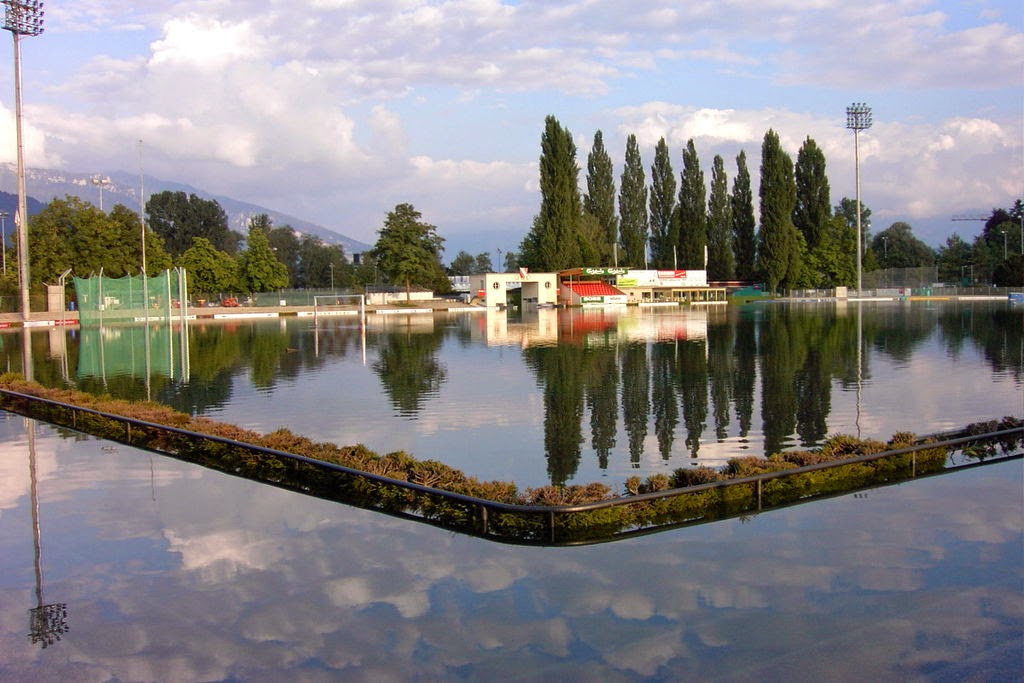
A 2005 flood in Thun, Switzerland, uploaded by Zumbo, Wikimedia Commons, under the Creative Commons 3.0 license

Thursday, August 21, 2014

When science meets politics: the EU’s impact assessment review and the precautionary principle

Frederic Simon in EurActiv: Since the turn of the century, the European Union has striven to improve its decision-making by requesting a detailed impact analysis before taking new major policy initiatives. Impact assessments (IAs) are now routinely conducted to predict the likely consequence of EU legislation on citizens and the wider economy, in a detailed cost-benefit analysis.

The European Commission is currently reviewing the guidelines on how it carries out IAs and has committed to publish new ones by the end of 2014. The debate may sound technical but could have far-reaching consequences: an IA may lead the Commission to make substantial amendments to a legislative proposal, scale it down or even drop it altogether. Products and technologies may be approved or rejected as a result, leading to new growth opportunities or job losses depending on the outcome.

And some questions can easily turn explosive when science is thrown into the mix – on topics such as climate change, renewable energies, GMO authorisation, shale gas or the regulation of endocrine-disrupting chemicals. On each of these, the Commission seeks advice from the scientific community to determine what form of regulation is needed, if any, applying the precautionary principle. It is therefore no surprise that IAs have attracted attention and sometimes, criticism.

Some see them as just another layer of bureaucracy and a further impediment to faster and leaner law-making. Others have been suspicious of the IA process, saying the “evidence” presented there is prone to political manipulations and influence from a wide variety of interest groups, including powerful business lobbies.

Even the scientists feel they are being manipulated by politicians seeking to push specific policy initiatives. A big challenge for the incoming European Commission will be to disconnect its evidence gathering processes from the “political imperative” that’s driving policy proposals, said Anne Glover, the EU’s chief scientific advisor....

Aftermath of a car crash, shot by Jeff Attaway, Wikimedia Commons via Flickr, under the Creative Commons 2.0 license 

Tuesday, July 29, 2014

Organic farming has grown rapidly, says EU

EurActiv: The organic farming sector has grown rapidly over the past ten years, to about 500,000 new hectares every year, according to EU statistics. Both the number of organic farm holdings and area grew by more than half between 2003 and 2010.

In 2011, the European Union had 9.6 million hectares of organic farming land. The year before, there were more than 186,000 of such farms registered across the then 27-country bloc. Organic farming is defined as food production which has a minimal impact on the environment by operating as naturally as possible.

The EU has standards for organic farming, including the use of chemicals, in pesticides, fertilisers and animal medication, as well as the protection of animal welfare. Genetically modified organisms are not allowed to be used in organic agriculture.

Data shows that organic farmers are generally younger than the average conventional farmers in the EU. In 2010, some 61.3% of organic farmers were under 55, compared to 44.2% in the non-organic agriculture.

The majority of holdings (83%) and land (78%) used for organic farming were in the 15 ‘older’ member states, those that joined the European Union before 2004, such as France, Italy, Germany, Belgium and the UK. The EU attributes the greater share to national and European legislation....

A vegetable market in Pantin, outside Paris. Public domain

Monday, July 14, 2014

European Environment Agency urges for ‘systemic’ approach to environment, health concerns

EurActiv: Governments need to study the connections between health and environmental concerns, which could save them money and improve societal well-being over the longer term, according to the European Environment Agency.

...The EEA is also seeking to promote this kind of thinking in relation to climate change and other complex problems.

Noxious emissions can damage the environment, as seen in acid rain or reduced crop yields, or human health, with higher incidences of respiratory diseases, with the costs falling on governments and taxpayers.

"It may seem there is nothing new about considering different policy areas together – air pollution, for instance, has often been considered in terms of its health implications. But the report argues that research should further incorporate these areas, allowing us to gain a system-wide understanding of multiple causes and effects," the EEA says, referring to a report it released in February on the environment, health and well-being.

By failing to address the source of the problem, government costs can mount up, particularly in healthcare. Many European countries had to cut their healthcare budgets during the economic crisis, leaving citizens unable to receive treatment, such as medicines.

However, with many problems being inter-linked, the potential for governments to reduce their costs is great. “It is difficult to measure the effects of our environment on our health,” said Lode Godderis, a researcher on health and the environment with KU Leuven, in Belgium. However, sometimes the scientific evidence does reveal connections, he said....

Paris at night, shot by Benh LIEU SONG, Wikimedia Commons, under the Creative Commons Attribution-Share Alike 3.0 Unported, 2.5 Generic, 2.0 Generic and 1.0 Generic license 

Tuesday, July 1, 2014

The rural route to a more energy-secure Europe

Rob Vierhout in EurActiv: In 2014, Europe is remembering the tragic consequences of two World Wars.  The under-rated miracle of the European Community, then Union, not only helped to deliver Western Europe from a state of self-destruction to peace, but also provided the framework for almost 50 years of steady economic growth and the creation of a European social model that is the envy of the world.

However, a mixture of globalisation, technology and sometimes-misguided policies is now combining to threaten this stability. As Europe struggles to recover fro
m its worst economic crisis for nearly 100 years, we face a huge challenge to remain competitive, provide good jobs for our youth, and regain our leadership position.

Energy is at the heart of this struggle. As the first continent to industrialise, Europe has already used up much of its indigenous fossil fuel resources. Even if it has become a world leader in solar and wind technology, Europe currently relies extensively on energy imports. Last year, more than half of all the continent’s energy came from outside its borders. In the transport sector, this is even worse with 94% of its energy coming from oil, of which 84% is imported from politically unstable regions.

...In this context, renewable energy sources should rightly take centre-stage. We can use the sun, the wind, even the tides to make power, which will not be influenced by global politics. But, what about Europe’s plentiful land?

Using agricultural products, including increasingly agricultural and forest residues as well as municipal waste to make ethanol, represents a huge opportunity for Europe to reduce its reliance on imports in the transport fuel sector.

This is just the beginning. There are at least 1.7 million hectares of unused farmland in Europe.  The FAO stats tell us that the EU 28 is abandoning 0.5m hectares of additional farmland every year.  Only 0.7% of Europe’s agricultural land is currently being used to produce crops for ethanol – less than the total area of unused land in Romania alone. If we put this abandoned farmland to work, and take advantage of increased agricultural yields, the production of European renewable ethanol using European feedstock could easily double production of ethanol in no time. ...

A combine harvesting a field in the Czech Republic, shot by Podzemnik, Wikimedia Commons, under the Creative Commons 3.0 license

Thursday, June 26, 2014

New study quantifies the effects of climate change in Europe

Science Daily via the EU's Joint Research Centre: If no further action is taken and global temperature increases by 3.5°C, climate damages in the EU could amount to at least €190 billion, a net welfare loss of 1.8% of its current GDP. Several weather-related extremes could roughly double their average frequency. As a consequence, heat-related deaths could reach about 200,000, the cost of river flood damages could exceed €10 billion and 8000 km2 of forest could burn in southern Europe. The number of people affected by droughts could increase by a factor of seven and coastal damage, due to sea-level rise, could more than triple. These economic assessments are based on scenarios where the climate expected by the end of the century (2080s) occurs in the current population and economic landscape.

These are just some of the findings of a new report by the European Commission's in-house science service, the Joint Research Centre, which has analysed the impacts of climate change in 9 different sectors: agriculture, river floods, coasts, tourism, energy, droughts, forest fires, transport infrastructure and human health. The report also includes a pilot study on habitat suitability of forest tree species.

Connie Hedegaard, European Commissioner for Climate Action said: "No action is clearly the most expensive solution of all. Why pay for the damages when we can invest in reducing our climate impacts and becoming a competitive low-carbon economy? Taking action and taking a decision on the 2030 climate and energy framework in October, will bring us just there and make Europe ready for the fight against climate change.

Expected biophysical impacts (such as agriculture yields, river floods, transport infrastructure losses) have been integrated into an economic model in order to assess the implications in terms of household welfare. Premature mortality accounts for more than half of the overall welfare losses (€120 billion), followed by impacts on coasts (€42 billion) and agriculture (€18 billion).

The results also confirm the geographically unbalanced distribution of climate change related damages. For the purpose of this study, the European Union is divided into 5 regions. What the study identifies as southern Europe and central Europe south (see background for details) would bear most of the burden (- 70%), whereas the northern Europe region would experience the lowest welfare losses (- 1%), followed by the UK and Ireland region (- 5%) and central Europe North (- 24%)....

High water on the Rhine in Bonn (2011), shot by Stefan Knauf, Wikimedia Commons, under the Creative Commons 0 license

Wednesday, June 11, 2014

EU proposal scraps mandatory 'dirty' label for tar sands

EurActiv: A mandatory EU requirement to label oil from tar sands as more polluting than other forms of crude could be scrapped altogether following years of lobbying from top producer Canada, according to a draft European Commission proposal. The change removes one obstacle to Canada shipping crude from tar sands to Europe, but will be criticised by environmental campaigners.

The clay-like sands have to be dug up in open-pit mines with massive shovels, or blasted with steam and pumped to the surface, before oil can be extracted. As a result, the oil costs more to produce than regular crude, uses more water and energy, and emits more carbon.

Canada, oil majors and the refining industry have fiercely opposed EU plans to label tar sands as highly polluting. In the context of the Russia/Ukraine crisis and fears about European energy security, Canada argues Europe should be embracing its oil as a secure form of energy.

"We don't see the crisis in Ukraine as simply an opportunity to market Canadian products, but obviously we're deeply engaged in a discussion with our allies on how we can make sure that globally our energy supplies are secure and stable," Canadian Prime Minister Stephen Harper told reporters after G7 talks in Brussels on Thursday (5 June).

...The European Commission draft document proposed that oil refiners would only have to report an EU-wide average of the emissions for the feedstock they use. "The proposed methodology requires suppliers to report a (European) Union average greenhouse gas emission intensity per fuel with an option to report supplier specific values," the draft said....

Syncrude's Mildred Lake plant in the Athabasca Oil Sands of Alberta, Canada. Shot by The Interior, Wikimedia Commons, under the Creative Commons 3.0 license

Saturday, May 24, 2014

Stanford research shows importance of European farmers adapting to climate change

Laura Seaman at Stanford News: A new Stanford study finds that due to an average 3.5 degrees Fahrenheit of warming expected by 2040, yields of wheat and barley across Europe will drop more than 20 percent.  New Stanford research reveals that farmers in Europe will see crop yields affected as global temperatures rise, but that adaptation can help slow the decline for some crops.

For corn, the anticipated loss is roughly 10 percent, the research shows. Farmers of these crops have already seen yield growth slow down since 1980 as temperatures have risen, though other policy and economic factors have also played a role.

"The results clearly showed that modest amounts of climate change can have a big impact on yields of several crops in Europe," said Stanford doctoral student Frances Moore, who conducted the research with David Lobell, an associate professor of environmental Earth system science.

..."By adaptation, we mean a range of options based on existing technologies, such as switching varieties of a crop, installing irrigation or growing a different crop, one better suited to warmer temperatures," said Lobell, the associate director of the Center on Food Security and the Environment at Stanford. "These things have been talked about for a long time, but the novelty of this study was using past data to quantify the actual potential of adaptation to reduce climate change impacts. We find that in some cases adaptation could substantially reduce impacts, but in other cases the potential may be very limited with current technologies."

According to the analysis, corn has the highest adaptation potential. Moore and Lobell predict that corn farmers can reduce yield losses by as much as 87 percent through long-term adaptation. ...

A cornfield near Straelen, Germany, shot by flamenc, Wikimedia Commons,  under the Creative Commons Attribution-Share Alike 3.0 Unported license 

Wednesday, May 7, 2014

EU pledges further work on climate ‘resilience’

EurActiv: The EU commissioners dealing with development cooperation and humanitarian aid have pledged more work on “resilience”, defined as the ability of individuals and communities to recover from shocks and stresses. The idea has become more prominent in development discussions in Brussels, as policymakers have searched for ways to mitigate the expected effects of climate change.

Many of the world’s most vulnerable people have been buffered or seen their livelihoods destroyed by extreme weather events, such a typhoon in the Philippines last year, Haiyan, and severe flooding in Bangladesh.

Kristalina Georgieva, the commissioner for humanitarian aid and crisis response, said at the EU’s first forum on resilience, on Monday (28 April), that the concept was “nothing new”, as it referred to “coping mechanisms people have to create themselves”.

The commissioner said that while the worst of the crisis received considerable media attention, the “success of resilience” was “a difficult story to tell”. She added that people in Bangladesh had switched from chickens to rearing ducks, as a way to cope with the floods....

European flag outside EC headquarters, shot by Xavier Häpe, Wikimedia Commons via Flickr, under the Creative Commons Attribution 2.0 Generic license

Tuesday, March 11, 2014

European support for climate change action 'not dented by financial crash'

Fiona Harvey in the Guardian (UK): The financial crisis and recession across Europe have not put people off fighting climate change, a new poll for the European Commission has shown. It found the number of people supporting a “green economy” has risen in the past three years. At least two thirds of people in all EU member states said that transforming the economy on to a green footing, by reducing greenhouse gas emissions and investing in green technologies, would boost the economy and reduce unemployment.

Even in those member states that have suffered the worst effects of the financial crisis and recession, a large majority are of the opinion that energy efficiency and moves to a greener economy could be beneficial. Nearly nine in ten over respondents in Greece, Spain and Portugal said they believed that fighting climate change and using energy more efficiently would boost the economy and jobs.

Across the EU, about seven in ten people think that reducing the EU’s fossil fuel imports – that run to more than half a billion euros a year – would be a good idea. The results came in a survey conducted by Eurobarometer, the pan-EU polling service, and published on Monday.

Jose Manuel Barroso, the president of the European Commission, said that the imperatives of cutting greenhouse gas emissions and improving the economy need not be mutually exclusive. “Cost-effective climate action is indeed good economics. I am very encouraged that European citizens recognise that too. This poll sends a strong signal to EU leaders to take bold climate action for a sustainable economic recovery.”

Connie Hedegaard, the EU’s climate chief, said: “The poll confirms a clear majority of Europeans expect their politicians to tackle the climate challenge now. [They] understand that climate chnge did not go away while their governments were busy handling the economic crisis. It is not either growth and competitiveness or the climate: it is both, it has to be both.”...

Seen in Munich's Viktualienmarkt, shot by BeAr, Wikimedia Commons, under the Creative Commons Attribution-Share Alike 3.0 Unported license 

Saturday, March 8, 2014

Researchers map European climate change

EurekAlert via the Institute of Physics: The majority of Europe will experience higher warming than the global average if surface temperatures rise to 2 °C above pre-industrial levels, according to a new study published today. Under such a scenario, temperatures greater than the 2 °C global average will be experienced in Northern and Eastern Europe in winter and Southern Europe in summer; however, North-Western Europe—specifically the UK—will experience a lower relative warming.

The study, which has been published today, 7 March, in IOP Publishing's journal Environmental Research Letters, also shows that in the summer, daily maximum temperatures could increase by 3𔃂 °C over South-Eastern Europe and the Iberian Peninsula and rise well above 40 °C in regions that already experience some of the highest temperatures in Europe, such as Spain, Portugal and France. Such higher temperatures will increase evaporation and drought.

In the winter, the maximum daily temperatures could increase by more than 6 °C across Scandinavia and Russia. Lead author of the research Robert Vautard, from Laboratoire des Sciences du Climat et de l'Environnement (CEA/CNRS/UVSQ), said: "The 2 °C warming target has mainly been decided among nations as a limit not to exceed in order to avoid possibly dangerous climate change. However, the consequences of such a warming, at the scale of a continent like Europe, have not yet been quantified.

"We find that, even for such an ambitious target as 2 °C, changes in European climate are significant and will lead to significant impacts."

The study also shows that there will be a robust increase in precipitation over Central and Northern Europe in the winter and Northern Europe in the summer, and that most of the continent will experience an increase in instances of extreme precipitation, increasing the flood risks which are already having significant economic consequences. Southern Europe is an exception, and will experience a general decline in mean precipitation....

The clock tower in Piazza San Marco, in Venice, shot by G.dallorto, Wikimedia Commons, under the Creative Commons Attribution-Share Alike 2.5 Italy license 

Sunday, March 2, 2014

Flood damage cost to rise fivefold across Europe

Damian Carrington in the Guardian (UK): The huge cost of flood damage is set to soar fivefold across Europe in coming decades, according to the first comprehensive analysis of risk across the continent. The cost of homes, belongings, businesses and infrastructure wrecked by the wettest winter in England for 250 years has been at least £1bn and over the last decade the average annual loss across the European Union has been €4.5bn. But increasingly intense downpours driven by climate change, as well as population growth and urbanisation, will see that rise to €23bn a year by 2050, the study found.

The growing prosperity of citizens is also a factor, according to Brenden Jongman, a researcher at the VU University Amsterdam, who led the new work. “People increasingly have more expensive stuff – like expensive televisions and other gadgets – than they had 50 years ago,” he said.

The costs of damage could be curbed by better flood protection and insurance schemes, but faces political obstacles, according to Jongman. “For rare events [like England’s wettest winter on record] the chances of it happening within the term of one government is low, so the incentive for politicians to invest in flood protection is quite low,” he said. “The cost is upfront but the benefits are over decades.”

The UK’s coalition government cut annual flood defence spending sharply after entering office in 2010 and the Guardian revealed earlier in February that projects in flood-stricken areas from the Somerset Levels to the Thames valley were not built as a result.

The new research, published in the journal Nature Climate Change, found that improving flood defences across the EU to resist once-a-century flooding would save €7bn a year by 2050 but cost just €1.75bn. In the UK, most flood defences save £8 for every £1 spent....

A 2013 flood in Passau, on the Danube, shot by Stefan Penninger, Wikimedia Commons via Flickr,  under the Creative Commons Attribution-Share Alike 2.0 Generic license 

Monday, February 24, 2014

European scientists descend on Africa to promote GM crops

John Vidal in the Guardian's "global development" blog (UK): Africa is expected to be the next target of GM food companies, as European scientists and policymakers travel to Ethiopia to boost the prospect of growing more of the controversial crops on the continent.

Anne Glover, the chief scientific adviser to the European commission, and other prominent pro-GM researchers and policymakers from European countries including Germany, Hungary, Italy and Sweden will this week meet Ethiopian, Kenyan, Ghanaian and Nigerian farm ministers as well as officials from the African Union.

The British environment secretary, Owen Paterson, who said last year that the UK would be acting immorally if it did not make GM crop technologies available to poor countries, pull
ed out of the conference in Addis Ababa, organised by the European Academies Science Advisory Council (Easac).

According to an Easac spokeswoman, the meeting is intended to help EU and African scientists collaborate to allow the crops to be grown more easily on the continent. "EU policy on GM crops is massively important for Africa," she said. "A lot of countries are scared to do any research. They fear they will be punished by EU restrictions. They depend on the EU for their exports."

Critics, however, said the meeting was a thinly disguised attempt to promote GM farming at a governmental level, whether or not it was good for local farmers. "The meeting has the appearance of giving the European stamp of approval on GM crops, even though the majority of EU citizens oppose GM in food," said a spokeswoman for GM Watch, a UK-based NGO....

Image of DNA by JFantasy, Wikimedia Commons, under the Creative Commons Attribution 3.0 Unported license

Thursday, February 6, 2014

EU set to approve new GM corn after Germany drops objection

Seed Daily via AFP: A new genetically modified crop, US firm Pioneer's TC1507 corn, is set for approval in Europe next week after Germany dropped its objections, several EU sources told AFP Wednesday. "Germany is moving from being against to abstaining" in a vote on the long-running controversy, said a source close to the dossier who asked not to be identified. A second source confirmed.

Ministers meeting in Brussels on Tuesday are to hand down a final decision on the cultivation of TC1507 corn after a European Court ruled late last year that the company's 2001 request for permission must be dealt with. But the 28-nation bloc is badly divided over GM crops, and the EU's complex voting arithmetic has been at the heart of a deadlock on a decision.

The European Union's general affairs ministers will decide next week using qualified majority voting -- which is weighted to take account of the bigger states. If there is no majority against due to one nation's abstention, then approval will be automatic, said the EU's Health Commissioner Tonio Borg on website Vieuws.

When the principle was last voted on in 2009, the heavyweights of Britain, France and Germany ended up cancelling each other out. Asked to allow GM cultivation in the EU, but to leave space for national and even territorial opt-outs on non-health or environmental grounds, Britain was one of six backers...

A withered corn field near Erftstadt, Germany, shot by Christian Nurtsch, Wikimedia Commons,  under the Creative Commons Attribution-Share Alike 2.0 Germany license

Saturday, January 11, 2014

Europe lacks 13 million beehives to pollinate crops

A press release from the University of Reading: Europe has 13.4 million too few honeybee colonies to properly pollinate its crops, according to new research from the University of Reading.

The discovery, made by scientists at the University's Centre for Agri-Environmental Research (CAER), shows that demand for insect pollination is growing five times as fast as the number of honeybee colonies across Europe as farmers grow more oil crops, such as oilseed rape and sunflowers, and fruit.

Researchers, led by Professor Simon Potts at the University of Reading, compared the numbers of active beehives to the demand for pollination services across 41 European countries, and mapped the changes between 2005 and 2010. They found:

  • In more than half of European countries - including the UK, France, Germany and Italy, there were not enough honeybees to properly pollinate the crops grown.
  • The problem was particularly acute in Britain, which has only a quarter of the honeybees it needs to pollinate crops.
  • Only Moldova - one of the continent's poorest countries, with an economy more than 300 times smaller than Britain's - has a bigger honeybee deficit than the UK.
  • Europe as a whole only has two thirds of the honeybee colonies it needs, with a deficit of more than 13.4 million colonies

The findings suggest that agriculture in many countries is increasingly reliant upon wild pollinators, such as bumblebees, solitary bees and hoverflies. However, Europe still lacks coherent environmental and agricultural policies to protect these insects' habitats....

A 14th century image of bee hives

Thursday, January 9, 2014

Europe's storms send power prices plummeting to negative

Karolin Schapps and Vera Eckert in Reuters: North Europe's devastating storms sent wind turbines spinning and helped strengthen a new winter phenomenon for the region - negative electricity prices. Damaging for utilities losing money making electricity, delighting traders who cash in on price swings, they will not, however, mean cheap power for households.

A raft of elements to subsidize the green energy boom make up half of most consumer power bills, shielding them from immediate wholesale market price swings.

Over the Christmas holiday, which typically causes a drop in energy demand, wholesale electricity prices in Germany, the Nordic region, the Czech Republic and Slovakia turned negative on excessive renewable energy production and mild weather.

Wind and rain bring out the best in renewable energy from turbines and hydro power, a major source of Nordic electricity. Calm weather hampers green energy output. Meteorologists say mild and wet weather could continue until March.

When renewable energy output is higher than necessary, as in stormy weather, producers face negative market prices because electricity cannot be stored in high volumes. "I think negative prices will become more common with more wind farms being built. With more wind farms the chances of having supply outstripping demand are higher and this is the cause of the negative prices," said one European power trader....

A windfarm in Germany, shot by Prankster, Wikimedia Commons, under the Creative Commons CC0 1.0 Universal Public Domain Dedication