Showing posts with label dengue. Show all posts

Sunday, November 9, 2014

Dengue's spread flies under the radar amid ebola scare

AFP: One of the most familiar sounds in Malaysia's capital is the approaching drone of a fumigation fogger spewing thick white plumes of insecticide, part of so-far futile efforts to arrest a spiralling dengue fever outbreak.

Malaysia is among several countries across Asia and Latin America grappling with a mosquito-borne virus that is proving tough to eradicate as it infects millions.

While the Ebola threat has captured headlines, the World Health Organization (WHO) warns that dengue -- while far less lethal -- has become one of the fastest-growing global health threats, contracted by 50-100 million people each year.

"The increase in dengue incidence and severity of the outbreaks is a global phenomenon, with a 30-fold increase over the past five decades," said Ahmed Jamsheed Mohamed, a doctor in the WHO's Southeast Asia office, adding that eradication is "not seen as feasible in the near future".

...While Ebola has killed nearly 5,000 people this year, mainly in west Africa, with an estimated 13,000 infections, dengue kills up to 20,000 annually, and 40 percent of the world's population live in dengue-risk areas....

Mosquito larvae, photo data unavailable 

Tuesday, October 7, 2014

India dengue fever cases 300 times higher than officially reported

Jason Burke in the Guardian (UK): The annual number of dengue fever cases in India is nearly 300 times higher than officially reported, according to a study by US and Indian researchers. The report also finds the sometimes-fatal viral disease, which is transmitted by mosquitoes, costs the emerging economic power at least $1.1bn (£700m) each year in medical and other expenses.

“We found that India had nearly 6m annual clinically diagnosed dengue cases between 2006 and 2012 – almost 300 times greater than the number of cases that had been officially reported,” said Prof Donald S Shepard, health economics professor at Brandeis University, Massachusetts, who led the five-year research project.

The scale of the under-reporting surprised researchers and will raise concerns that India’s response to the disease is inadequate, causing unnecessary suffering locally and undermining global attempts to restrict the spread of the virus.

“With most infectious diseases the public healthy community has been succeeding. Ebola is an exception but hopefully a short-term one. My hope for the next decade is that we turn the tide with dengue,” said Shepard, who has been working on dengue since the early 1990s....

The culprit, shot by ProjectManhattan, Wikimedia Commons, under the Creative Commons 3.0 license 

Thursday, July 24, 2014

Genetically modified mosquitoes set to be released in Brazil to combat dengue

Justine Alford at IFL Science: ... Mosquitoes kill more people each year than all other animals combined, and on average they kill even more people than humans do. It is estimated that over 1 million people die per year from mosquito-borne diseases, such as Malaria and Dengue Fever, and millions more endure pain and suffering.

Tackling this problem has proved a formidable task in the past, but a very small UK-based company called Oxitec have been developing and implementing an exciting and cost effective technique that could help curb vector-borne diseases in problem areas without the negative environmental impacts that other approaches often bestow. This sustainable technique, which involves the release of “sterile” insects into the wild, has already proved a success story in several dengue mosquito trials in different areas of the world, and can also be applied to control other insect problems such as agricultural pests which risk food security. Furthermore, a factory in Brazil is set to be opened next week in order to raise and release these mosquitoes on a commercial scale in order to tackle Dengue Fever.

Dengue fever is the fastest-growing mosquito-borne disease in the world; incidence has increased 30-fold over the last 50 years, and currently it affects around 50-100 million people each year and causes around 25,000 deaths. It’s a viral disease spread primarily by two species of mosquito; Aedes aegypti and Aedes albopticus, although the former is responsible for the majority of transmissions. Dengue is sometimes nicknamed “breakbone fever” because of the agonizing bone pain associated with the illness, and severe cases may result in the often fatal manifestation dengue hemorrhagic fever. Currently there are no vaccines or effective antiviral drugs, meaning that mosquito control is the only viable option to control the disease....

A mosquito, photographed by ProjectManhattan , Wikimedia Commons, under the Creative Commons 3.0 license

Monday, April 7, 2014

Swedish researchers map the risks of new virus epidemic in Europe

A press release from the University of Umea (Sweden): The risk of dengue fever beginning to spread in Europe is imminent. According to researchers from Umeå University, this is no longer just an issue for the scientific community but also for politicians and policy makers, who need to be prepared and develop preventive measures.

With a changing climate and rising temperatures in Europe, the incidence of the Aedes aegypti mosquito has also increased. The mosquito is the main vector of dengue that can cause haemorrhagic fever. Although no outbreak of the disease has not yet occurred in Europe, researchers at the Epidemiology and Global Health unit at Umeå University claim that there is now good living conditions for the mosquito in Europe and that it is therefore only a matter of time before we see an epidemic here. The Aedes albopictus mosquito has already established itself in large parts of Europe. Even though it is not as competent a vector as Aedes aegypti, several domestic cases of the disease have been observed in countries such as France and Croatia.

“The last outbreak of dengue in Portuguese Madeira when several thousand became ill, shows that it is no longer a theoretical possibility that the disease can take hold in Europe. It is a reality that can strike at any time,” says Raman Preet, researcher and scientific project manager of the Dengue Tools project at the Department of Epidemiology and Global Health, Umeå University.  “When the disease shows up in Europe it has probably accompanied travellers in areas in the world where the disease is established. Then it will be spread with the help of the Aedes mosquito”.

The risk for Swedish travellers to be infected by dengue is highest when going to Sri Lanka and Bangladesh, while most cases in Sweden stems from trips to Thailand....

Turner's "Fifth Plague of Egypt"

Thursday, November 14, 2013

New research reveals dengue fever mystery in two US cities both exposed to risk

EurekAlert via the American Society of Tropical Medicine and Hygiene: As dengue fever continues to spread from Key West north into the Florida mainland, it remains a mystery as to why this dangerous mosquito-borne illness is not yet common around Tucson, Arizona—even though outbreaks routinely occur in nearby Mexico and mosquitoes that can carry dengue are now common in the state, according to a new research presented today at the annual meeting of the American Society of Tropical Medicine and Hygiene (ASTMH).

"Key West and Tucson share a lot of risk factors. Even in arid Tucson we have a large population of mosquitoes that can carry dengue, and people here spend a lot of time outdoors, but we have yet to see evidence of locally-acquired infections," said Kacey Ernst, PhD, an infectious disease epidemiologist at the University of Arizona in Tucson.

Ernst presented preliminary findings from an ongoing study she is conducting with Mary Hayden, PhD, a scientist at the National Center for Atmospheric Research (NCAR) in Boulder, Colorado, whose work focuses on the link between human behavior and climate-related health threats.

Their survey of residents in the two cities 2,000 miles apart and with different climates turned up many similarities. More than half of the respondents in both cities reported spending at least an hour outside each day. The use of central air conditioning, thought to lower the risk of dengue, was virtually identical (55% in Key West vs. 56% for Tucson), though some of the Tucson air conditioning systems are less dengue-friendly. They note that many people in the Tucson area use evaporative cooling systems or "swamp coolers," which increase the humidity in the home and may increase mosquito survivability, particularly in a desert environment.

"It is still a mystery as to why dengue infection has not shown up here," Ernst said. "When researchers looked at why dengue is not more common along the Texas side of the Mexico border, they cited factors limiting contact with mosquitoes, like people spending a lot of time in sealed, air conditioned buildings. Those issues are extremely important considerations, but we don't think they fully explain why Key West has dengue and Tucson doesn't."...

Tucson at dusk shot by Zereshk, Wikimedia Commons, under the Creative Commons Attribution 3.0 Unported license

Monday, September 30, 2013

Scientists turn data into disease detective to predict dengue fever and malaria outbreaks

Medical Xpress: Scientists from IBM are collaborating with Johns Hopkins University and University of California, San Francisco to combat illness and infectious diseases in real-time with smarter data tools for public health. The focus is to help contain global outbreaks of dengue fever and malaria by applying the latest analytic models, computing technology and mathematical skills on an open-source framework.

Vector-borne diseases, like malaria and dengue fever, are infections transmitted to humans and other animals by blood-feeding insects, such as mosquitoes, ticks and fleas.

Once thought to be limited geographically to the tropics or developing countries, they continue to show up all over the world and are among the most complex and dangerous infectious diseases to prevent and control. The rise of global transportation, trade and climate change allows insects to easily carry disease organisms across borders, infecting animals as well as humans. Dengue fever, for example, has spread to over 100 countries, including the United States, and malaria is responsible for over one million annual deaths. Finding and implementing new, innovative methods of predicting outbreaks is key to saving lives.

Epidemiologists rely on disease and vaccine simulations to determine the spread of global infection. Until recently, these models were hosted on closed systems and took years to produce due to inefficient data collection and lack of computing power. This approach to model development makes it too slow to respond on a timescale relevant to unexpected pandemics as large populations can be crippled by never before seen viruses or illnesses in a matter of days or weeks. Scientists need to understand not only the dynamics of the disease itself, but also the spread of insect vectors and contributing environmental factors....

A TEM micrograph showing Dengue virus virions (the cluster of dark dots near the center)

Tuesday, August 27, 2013

Dengue fever epidemic sparks public health emergency in Central America

Thomas Diego Badia in the Guardian (UK): A dengue epidemic is raging in Central America, from Honduras to Costa Rica. The virus has already claimed 60 lives, with a total of 120,000 cases. The Pan American Health Organisation fears the figures may "explode", with this year looking "unusually bad".

Several factors are likely to exacerbate the situation. The rainy season, which starts in June in that part of the world, is set to continue until November. With heavy rainfall and torrid heat, conditions are particularly favourable for proliferation of the main vector of dengue fever, the Aedes aegypti mosquito, whose eggs hatch on the surface of ponds.

With the rising number of new cases, Honduras, El Salvador and Costa Rica announced a health emergency in July and launched campaigns to prevent the disease from spreading. Lacking adequate resources, Honduras, which has been hardest hit with at least 17 fatalities and 20,000 cases reported, appealed to the International Red Cross for help.

"The $169,000 in aid provided by the disaster relief emergency fund enables us to distribute mosquito nets in high-risk areas, promote hygiene and combat vectors, in order to halt mosquito reproduction," says Amanda McClelland, a Red Cross co-ordinator.

The poor suburbs of Central American capitals are the main targets for campaigns to raise public awareness. Poor housing, the lack of a mains water supply and the accumulation of household waste make such neighbourhoods an ideal breeding ground for mosquitoes. The authorities have dispatched paramedics, police and the military to remote villages in order to stamp out the epidemic in the areas most at risk....

A TEM micrograph showing Dengue virus virions (the cluster of dark dots near the center).

Monday, August 5, 2013

Dengue epidemic feared as Pakistani vector control drive fails

Hasan Mansoor in Dawn (Pakistan): As [Karachi] received its first monsoon downpour on Saturday, the authorities admitted that they had done insufficient homework to keep dangerous dengue germs at bay especially when it was feared to attack once the season signed off and pools of water remained to provide them lethal breeding-grounds.

“We have not done anything satisfactory to stave off the danger of dengue with the culmination of monsoon and cannot rule out the possibility of more loss of human lives this year,” said a senior official in the provincial health department while speaking to Dawn.

While not sparing his department for making little efforts to save people from dengue, which gets lethal historically after every three years, which this year happens to be, the official said that the officials in the civic agencies were not proficient either. “We have held dozens of meetings and decided to take several actions to keep the lethal germs in check, but have done far little whenever it comes to taking action,” he said.

Sources said that apart from other actions, a focal group comprising six departments and civic agencies, failed to take rounds of the shops that repaired punctured tyres to ensure that they regularly change water in their tubs and duly wrap the stock tyres. Such tyres are considered to be ideal breeding-ground for mosquito as it shipped to Pakistan in consignments of tyres a couple of decades ago...

A Gene Daniels photo from 1973, National Archives (in the US, not Pakistan)

Wednesday, April 10, 2013

New poorly planned cities could catch dengue fever

Snehal Rebello and Priyanka Vora in the Hindustan Times: As new cities come up in an unplanned way in India, the dengue virus will find its way into cities that had no prior history of the infection, according to a multinational study on the global burden of the dengue.

The first global mapping of the burden of dengue, by an international consortium led by Oxford University, marks India in red, indicating a high risk of dengue occurrence and reveals that India accounts for one-third of the infections across the world every year. Researchers have stated that climate and population spread are important factors for predicting the current risk of dengue.

"With globalisation and the constant march of urbanisation, the virus may enter areas that previously were not at risk, and number of infections may increase in areas that are currently affected," said Professor Simon Hay, a Wellcome Trust Senior Research Fellow at the University of Oxford.

Over the past three years, there has been a significant rise in the number of dengue cases in Mumbai. While there were 115 cases detected in 2010, the number jumped to 1,008 last year. At present, there is no treatment or vaccine to treat the infection....

A mosquito, shot by snowyowls, Wikimedia Commons, under the Creative Commons Attribution-Share Alike 2.5 Generic license

Monday, March 11, 2013

Temperature changes effect growth of dengue mosquito

Phys.org: A significant field discovery analyzing how natural temperature fluctuations affect the growth rate of the dengue mosquito could lead to crucial control-and-prevention strategies, according to newly published research from Thomas Scott's Mosquito Research Laboratory and the Center for Vectorborne Diseases (CVEC), University of California, Davis.

The research, published March 8 in the PLOS ONE journal, shows that that "temperature effects on larval development time, larval survival and adult reproduction depend on the combination of mean temperature and magnitude of fluctuations," said lead author Lauren Carrington, a former postdoctoral fellow in the Scott lab and CVEC.

The scientists investigated how realistic fluctuations in temperature during the day influence the life-history traits and population dynamics of the dengue mosquito, Aedes aegypti. "The effect of temperature on insect biology is well understood under constant temperature conditions, but less so under more natural, fluctuation conditions," said Carrington, who completed her three-year postdoctoral fellowship last December at UC Davis but continues research projects with the Scott lab. She is now based at the Nossal Institute for Global Health, University of Melbourne, Australia.

The research, "Effects of Fluctuating Daily Temperatures at Critical Thermal Extremes on Aedes aegypti Life-History Traits," is expected to lead to greater accuracy of applications for mosquito surveillance and disease prevention. "An improved understanding of mosquito responses to natural temperature variation," Carrington said, "will enhance the effectiveness of vector control strategies, thereby reducing transmission of mosquito-borne diseases, such as dengue fever." By using constant temperatures, scientists can under- or -over estimate values, she said....

The aedes aegypti mosquito, carrier of dengue fever--image from the CDC

Monday, October 22, 2012

In vulnerable Greece, mosquitoes bite back

Kate Kelland in Reuters: Just when it seems things couldn't get any worse for Greece, the exhausted and indebted country has a new threat to deal with: mosquito-borne diseases. Species of the blood-sucking insects that can carry exotic-sounding tropical infections like malaria, West Nile Virus, chikungunya and dengue fever are enjoying the extra bit of warmth climate change is bringing to parts of southern Europe.

And with austerity budgets, a collapsing health system, political infighting and rising xenophobia all conspiring to allow pest and disease control measures here to slip through the net, the mosquitoes are biting back.

Already malaria, a disease eliminated from Greece in 1974, is not just returning with visitors and migrants - as it does from time to time in the rest Europe - but is being transmitted from person to person within Greek borders. This year's death toll from West Nile Virus, a disease spread by Culex modestus mosquitoes, stood at 16 on October 11.

It's a sign of the times that Medecins Sans Frontiers, a global medical charity more usually associated with the fight to save lives of babies in sub-Saharan Africa, is now working full time in parts of southern Greece....

The Parthenon, shot by Tormod, Wikimedia Commons, public domain

Wednesday, May 9, 2012

Dengue nightmare in Pakistan

Nimrah Amjad in the Pakistan Observer: Dengue is the most common disease among all the arthropod-borne viral diseases. Due to occurrence of remarkable changes in the epidemiology of dengue, currently dengue ranks as the most important mosquito-borne viral disease in the world.

Dengue fever epidemics have become a cyclical nightmare in Pakistan over the last several years. As of November 2011, it has killed over 300 people and over 14,000 are infected by this mosquito born disease. Majority of the people infected are from the Lahore area in Punjab.

Dengue viruses occur in mostly in tropical areas. Dengue hemorrhagic fever is a more severe form of the viral illness. Heavy monsoon rains has provided ideal conditions for dengue-carrying mosquitoes to thrive in stagnant waters. The upcoming prolonged monsoon rains could cause a rise in dengue mosquitoes. Unfortunately, many of the factors contributing to dengue outbreaks, from poor hygiene and sanitation to climate change, are risk factors common to most infectious diseases.

There is a need for larger clinical studies in Pakistan to better understand the range of infections, endemic patterns and genetic susceptibility of different populations to the dengue virus...

A TEM micrograph showing Dengue virus virions (the cluster of dark dots near the center), public domain image

Thursday, August 25, 2011

Philippine agencies to map dengue outbreaks

GMA News (Philipppines): Can dengue fever outbreaks be predicted? Science officials in the Philippines think so. With the country in the grips of dengue fever, the Department of Science and Technology (DOST) and the state weather bureau have launched a study that will enable health authorities to predict dengue outbreaks in the future.

Science Undersecretary Graciano Yumul Jr. said there might be a correlation between changes in weather, temperature, rainfall, and the location of the dengue fever surges in the country. Yumul said the Philippine Atmospheric, Geophysical and Astronomical Services Administration (PAGASA), the government meteorological agency, is currently conducting a review of its past data on weather variations, rainfall amount, and temperature changes.

These data will be cross-checked with information on dengue outbreaks and other infectious diseases that plagued the country in the past years. Yumul said the above-average rainfall that the country is experiencing due to climate change may increase the number of infectious diseases carried by mosquitoes and worms, creatures that thrive in damp climates and dirty environments.

“We have a dengue project. We are looking at dengue and its possible correlation with temperature and precipitation," he said in a phone interview yesterday. With enough information on, “maybe it will be possible to forecast it," he added. Yumul said there was a Pagasa and Department of Health studies in the past that showed the relationship between tropical diseases and weather. The study is being updated and will include information on malaria, another fatal mosquito-borne infectious disease, and parasitic worm illnesses, which affect children and the urban poor population....

A TEM micrograph showing Dengue virus virions (the cluster of dark dots near the center). From the Centers for Disease Control

Monday, June 13, 2011

Climate change brings risk of more infectious diseases in New Zealand

Xinhua: The number of New Zealanders being hospitalized with infectious diseases has surged in the last two decades, say researchers in a warning that the government must do more to understand the links between global warming and public health. More than a quarter of acute hospitalizations in New Zealand are resulted from infectious diseases, compared with only 18 percent in the early 1990s, said a statement from the University of Otago Sunday.

"A warmer, wetter and stormier climate has the potential to make this burden of serious illness significantly worse because of the biological and ecological origins of many infectious diseases. This potentially means both additional human suffering and additional costs to the tax-payer funded health system," said Nick Wilson, Associate Professorof the university's department of public health. A study conducted by the university showed "significant gaps in our knowledge" of the connections between climate change and infectious diseases, said Wilson.

Much more effort should be made by government agencies and researchers into the possible increase of infectious diseases because of climate change. "While climate change is having impacts on the environment, it is also critical to understand its current and potential impacts on human health, including infectious diseases," said Wilson.

One of the highest priorities identified by the study was the need for better understanding of the risk of mosquito-borne diseases, such as dengue fever, carried by insects from tropical countries. Many New Zealand habitats could be colonized by new mosquito species as temperatures and rainfall increased, it warned….

Frying Pan Lake in New Zealand. Original uploader was Famelor from de.Wikipedia.org, Wikimedia Commons, under the Creative Commons Attribution-Share Alike 3.0 Unported license

Monday, April 25, 2011

Doctors in US should be on lookout for dengue fever

Christine S. Moyer in the American Medical News: As cases of dengue infection escalate around the globe, authors of a new study are urging physicians to ask patients with fevers for travel histories. The mosquito-borne infection should be considered as a possible diagnosis for people who recently visited places where the disease is endemic, including Asia, the Caribbean, Central America and South America.

Doctors also should know the trends of the disease in the United States, the authors said.

Their study, published online April 13 in the Centers for Disease Control and Prevention's Emerging Infectious Diseases, found that more than three times as many people were hospitalized in the U.S. with dengue fever in 2007 than in 2000. Hospitalizations climbed from 81 cases in 2000 to 299 in 2007.

The study's authors attribute the increase, in part, to the growing number of worldwide dengue cases and the significant number of Americans who travel to areas where the disease is abundant. The global rise has been linked to climate change. Greater rainfall and warmer temperatures make it more conducive for infected mosquitoes to circulate.

"It's important for physicians to recognize who's at risk of dengue fever," said Judy A. Streit, MD, an author of the study. "Traditionally, [it has been people who] travel to disease-endemic areas." But, she added, physicians should not rule out the disease in patients with a febrile illness who have not been outside the country recently.

"Travel is not the only risk factor. We do have the vectors present in the U.S.," said Dr. Streit, assistant professor in the Dept. of Internal Medicine in the Division of Infectious Diseases at the University of Iowa Carver College of Medicine in Iowa City…

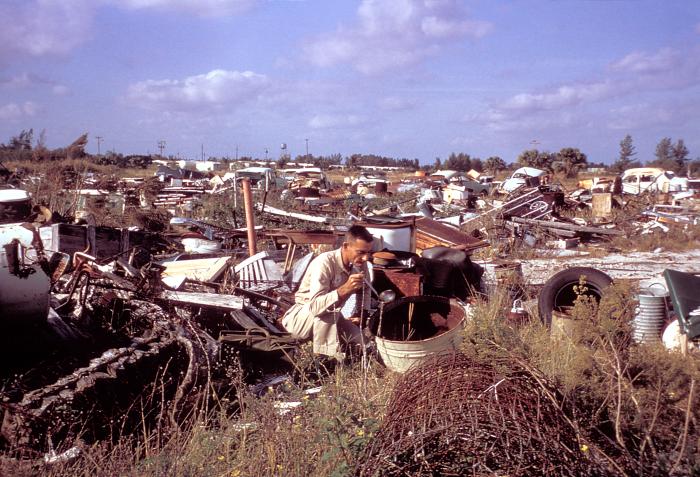
In the 1960s, a major effort was made to eradicate the principal urban vector mosquito of dengue and yellow fever viruses, A. aegypti, from southeast United States. This field technician is looking for larvae in standing water containers. Image source: Centers for Disease Control and Prevention Publich Health Image Library.

Sunday, April 3, 2011

Diseases linked to climate change in the Philippines

Manila Bulletin: Diseases caused by unusual changes in the weather are now on the rise, Sen. Loren Legarda, chair of the Senate committee on climate change Sunday warned. According to Legarda, there had been at least 13, 821 patients in hospitals across the country that were afflicted with dengue from January to February this year. In Metro Manila alone, there were 3,640 dengue cases—a 106 percent increase from the figures cited by the Department of Health (DoH) in 2010.

“This rise in dengue cases is a cause for alarm, especially because our country is one of the most vulnerable to vector-borne diseases,” Legarda said. Legarda said that in a study by the Climate Vulnerability Monitor 2010, it is not disasters but diseases that cause the most deaths by climate change.

A report conducted by another international organization, Development Assistance Research Associates (DARA), she said had observed that though the Philippines’ climate and location naturally assist in the propagation of dengue-carrying mosquitoes, “higher temperatures and more humid climates caused by climate change favor the growth in the populations of insects and vectors that spread diseases.”

“Now more than ever, it is of utmost importance that we put more effort into the prevention and control of climate-related diseases, and enhance the DoH’s capacity for early warning for any outbreak,” Legarda emphasized…

A TEM micrograph showing Dengue virus virions (the cluster of dark dots near the center). From the Centers for Disease Control