Showing posts with label summer. Show all posts

Friday, August 1, 2014

UK summer on track to become one of hottest in a century

Peter Walker in the Guardian (UK): There may be showers and slightly cooler weather due across much of the UK this weekend, but even that should not dampen the hopes of those wondering if the recent warm weather makes this summer one of the hottest on record.

Official figures show summer 2014 is unlikely to reach anywhere close to the exceptionally warm conditions of 1976, 2003 or 2006. Nevertheless, the data shows this year is already ranking amongst the warmest summers of the last century while the past month ranks as the eighth warmest July in Britain's national records, equal with 1933.

According to Met Office data in both June and July the mean UK temperature was 1.3C (2.34F) above average. This placed July as the joint eighth-warmest since equivalent records were first collected in 1910, with a day-and-night UK average of 16.3C (61F).

There were 228 hours of sunshine, 133% of the usual average for the month, making the Commonwealth Games summer the 10th sunniest on record, albeit some way from the 256 hours seen in 1955. It was the sixth sunniest July in records from 1929, while the sunniest day was in Glasgow on 9th.

However decent the overall picture, said Mark Wilson of the Met Office, the summer arguably felt all the better for coming after a series of significantly damper ones, notably 2012, the wettest for a century....

An aerial view of the Royal Crescent in Bath, shot by Arpingstone, public domain

Monday, June 2, 2014

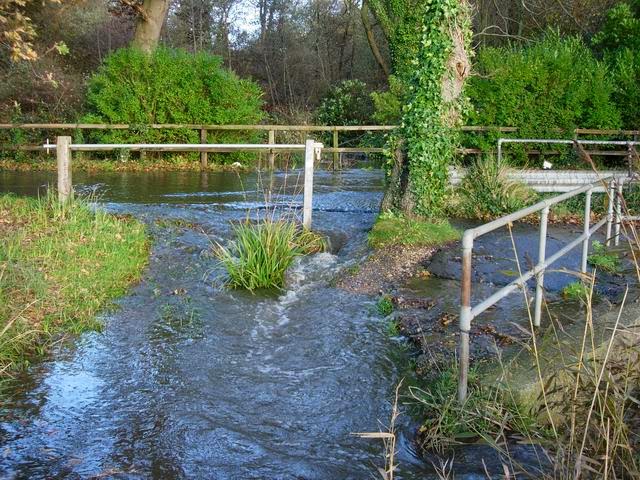
UK summer flash floods to become more frequent

Fiona Harvey in the Guardian (UK): Flash flooding in summer is likely to become much more frequent across the UK as a result of climate change, with potentially devastating results in vulnerable areas, according to new research.

The study, published in the peer-review journal Nature Climate Change, is the first to draw a direct link between climate change and an increase in summer downpours.

The research, a result of a collaboration between the Met Office and Newcastle University, used climate change computer models and standard weather prediction models of the type used for short-term weather forecasts. It found that summers would be drier overall, but punctuated by more extreme downpours.

These can have a much worse effect than the steady rainfall typical of winter, because the dry land is less capable of absorbing water, and when too much falls in a short period it runs off, causing flash floods of the type that struck Boscastle in 2004, one of the worst examples of sudden localised flooding in recent years.

Whether any given area is subject to flash flooding will depend heavily on its topography, such as the proximity of uplands and rivers, but vulnerable areas are likely to experience far more incidents than they did in the past....

A 2006 flood in the UK, shot by Hugh Venables, Wikimedia Commons via Geograph UK, under the Creative Commons Attribution-Share Alike 2.0 Generic license